

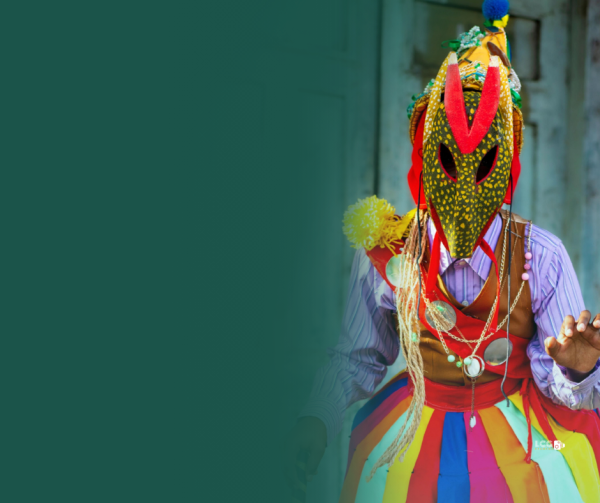

The Darién Gap, The Missing Link
The Pan-American Highway is an ambitious idea: to build a continuous road linking the nations of the Americas. Yet between Panama and Colombia lies the Darién Gap, a region of tropical rainforest, mountains, wetlands, and rivers where the highway doesn’t exist.
The missing link reflects more than difficult terrain. The Darién is extraordinarily biodiverse and home to indigenous peoples, particularly the Emberá and Wounaan. Completing the highway could accelerate deforestation, settlement, and threats to indigenous lands.
Most recently, this roadless landscape became a major route for migrants traveling north. The Darién Gap is both a break in a continental highway and a crossroads of environment, indigenous rights, development, and human migration.
Refugees brave the Darién Gap. Photo by Federico Rios
The desperation of hundreds of thousands of people around the world who are fleeing war, gang violence, drug trafficking, natural disasters, political turmoil, and poverty turned the Darién Gap into a “highway of hell” in 2023 and 2024. In 2023, migration through the Gap surged dramatically, with more than half a million people making the crossing. An estimated 300,000 people made the trek in 2024. Most of the immigrants were Venezuelans, but Colombians, Ecuadorians, Chinese, Haitians, and scores of other nationalities have been documented as part of the stream.
Video Resource:
What migrants face as they journey through the deadly Darien Gap | PBS News
Panama’s Recent History
With independence in 1903, Panama became a constitutional democracy dominated by a commercially oriented oligarchy. Only in the 1950s did the Panamanian military began to challenge the political power of this small elite. In the 1960s, other groups began pushing for the renegotiation of the Panama Canal treaty with major riots and looting in 1964. Following a contested and possibly fraudulent election in 1968, the National Guard took over the country with Omar Torrijos in charge. Torrijos established social security services, expanded public education, and redistributed land to poor farmers.
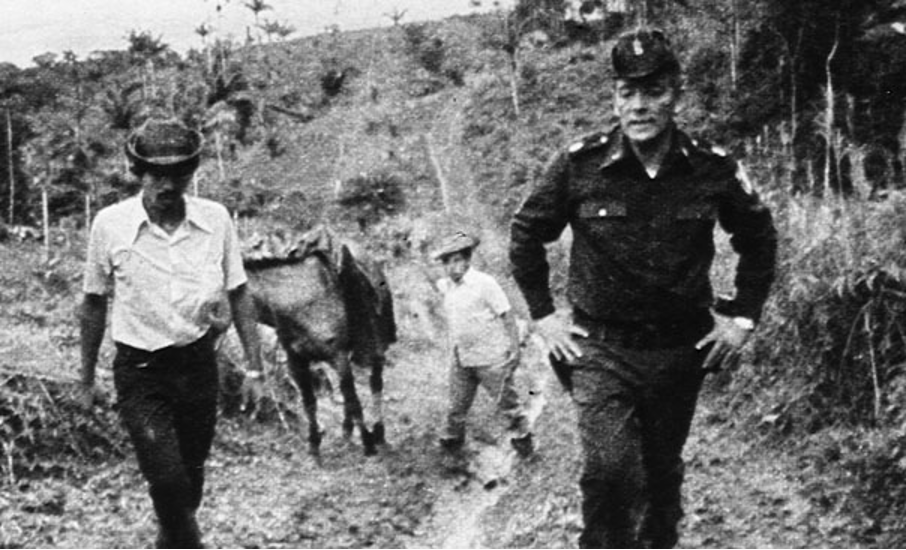
Omar Torrijos (right) with Panamanian farmers.
Omar Torrijos with Panamanian farmers - Panama - Wikipedia
When Torrijos died in a plane crash under mysterious circumstances in 1981, General Manuel Antonio Noriega took control of both the army (Panama Defense Forces) and the civilian government. Noriega's corrupt regime presided over a criminal economy that provided the military and its allies with income from the drug trade, money laundering, and smuggling Chinese migrants into the United States. The United States tolerated and supported Noriega because he worked with the Central Intelligence Agency (CIA) to smuggle arms to Nicaraguan anti-communist groups.
Domestic protests against the Noriega regime in 1987 finally led to the United States freezing economic and military assistance to Panama. When Noriega annulled the results of an election that overwhelmingly voted for candidates opposed to him, the United States invaded Panama on December 20, 1989.
The invasion of Panama was, at the time, the largest U.S. military operation since the Vietnam War.Codenamed Operation Just Cause, the administration of George H.W. Bush declared the operation “…necessary to safeguard the lives of U.S. citizens in Panama, defend democracy and human rights, combat drug trafficking, and secure the neutrality of the Panama Canal….” Twenty-three U.S. servicemen were killed and 324 were wounded. Approximately 450 Panamanian soldiers were killed with the civilian death toll being as many as 4000.
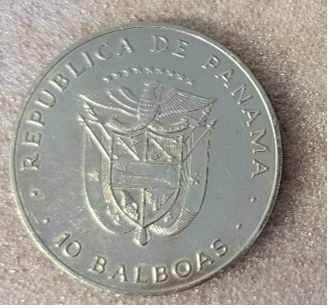
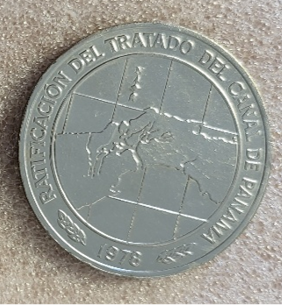
Ratification of the Panama Canal Treaties Commemorative Coin 10 Balboas
Franklin Mint, United States (for Panama)
1978
Nickel
Issued to Commemorate Ratification of the Panama Canal
Gift of Barbara Ellen Seni
This coin was issued to Commemorate Panama’s ratification of the Torrijos–Carter Treaties. The treaties ended U.S. control of the former Canal Zone and established the process through which control of the Panama Canal was transferred to Panama on December 31, 1999. The Balboa is Panama’s official currency and has been fixed as equivalent to the dollar since 1904.
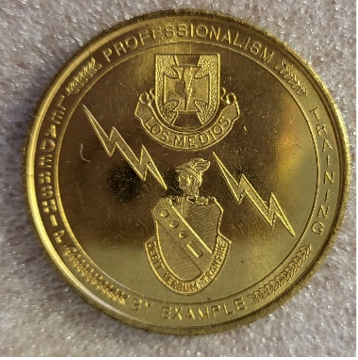
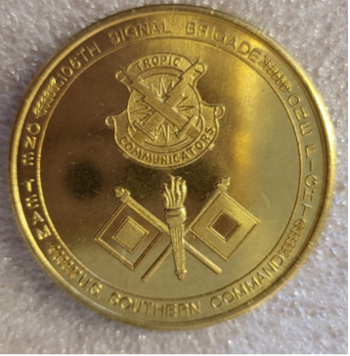
“Tropic Communicators” Commemorative Medallion
1109th Signal Brigade, U.S. Army Southern Command
Circa 1989–1991
Panama
Metal alloy
Gift of Barbara Ellen Seni
The 1109th Signal Brigade provided communications support for U.S. military operations in Panama during the final years of the American military presence in the Panama Canal. The brigade adopted the nickname “Tropic Communicators” and participated in Operation Just Cause in 1989. These medallions were presented to individuals for their meritorious service.
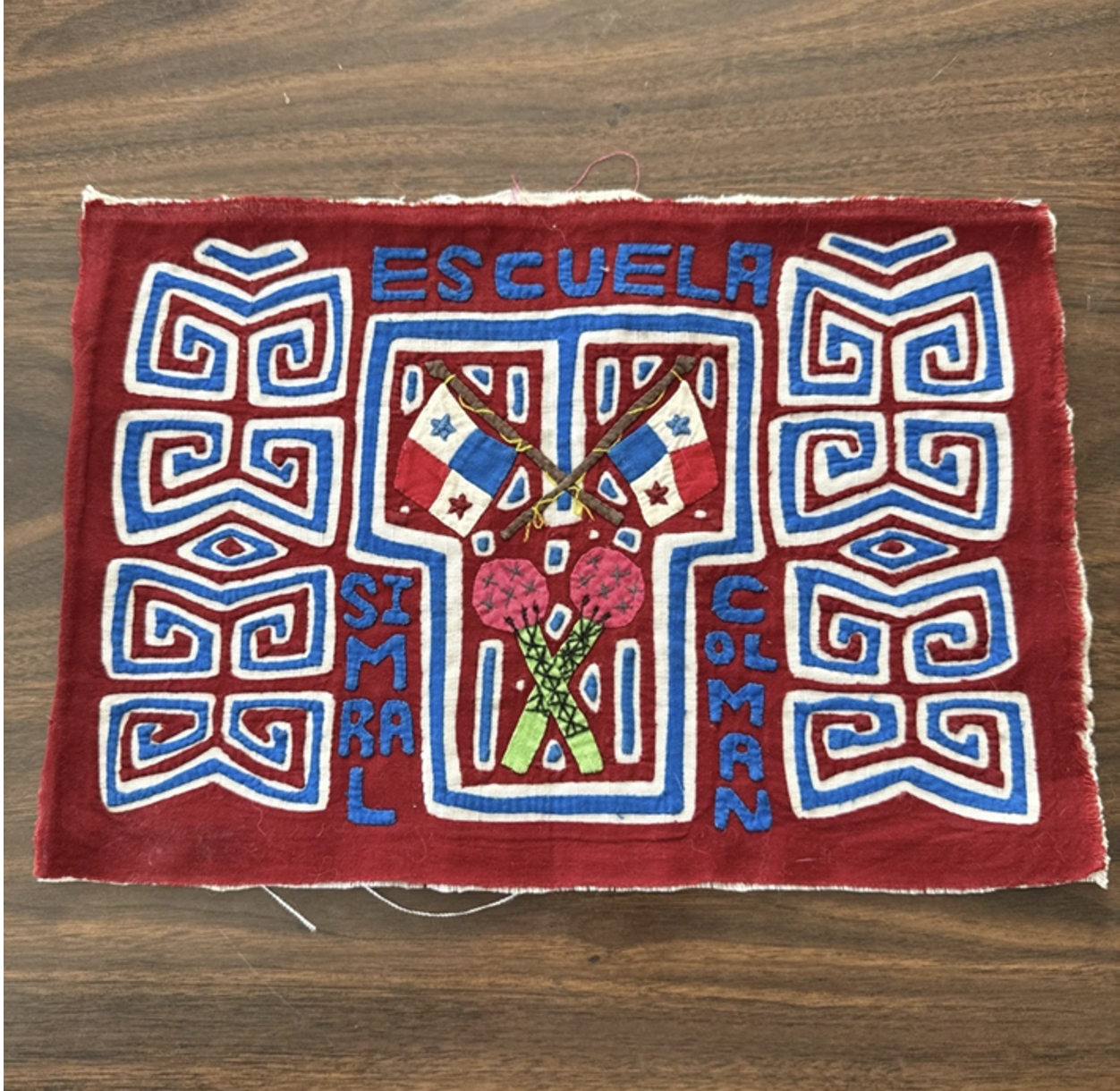
Simral Colman Mola
Guna Yala
1990s
Cotton with appliqué and embroidery
Panama
LACC Collection
Molas sometimes are used to commemorate historical events or make political statements.
This mola from the 1990s depicts two Panamanian flags and maracas representing a school named Simral Colman in Guna Yala, Panama. Simral Colman, Chief of Ailigandi in the San Blas Islands, was one of the leaders of the San Blas Rebellion in February 1925. The rebellion was an unsuccessful attempt by the Guna people to declare their independence from Panama.