


Arts and Culture
Panama’s arts and culture reflect its long history as a crossroads of peoples and traditions. Indigenous, African, European, Asian, Caribbean, and North and South American influences have blended to create a remarkably diverse range of visual arts, crafts, music, dance, festivals, literature, and performance that are distinctly Panamanian.
These traditions are not simply remnants of the past. Panamanian artists and performers continually reinterpret theier cultural heritage through contemporary art, music, literature, film, and performance—expressions of a country where peoples and cultures have met and mingled for centuries.
Dress
Panama’s most distinctive, elegant, and celebrated dress is the pollera. Spanish settlers brought these simple peasant skirts to Panama in the 16th century and indigenous and mixed-race women adapted them using local materials, embroidery styles, decorative techniques, and accessories. With many regional variations, the pollera today is a symbol of Panamanian identity and pride, prominently worn at weddings and during national celebrations. The Parade of a Thousand Polleras, which occurs in Las Tablas, annually celebrates these beautiful creations.
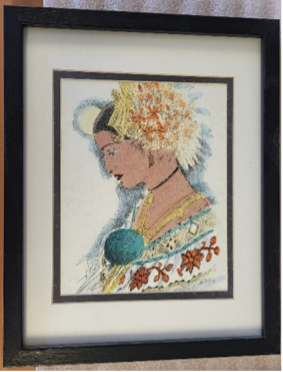
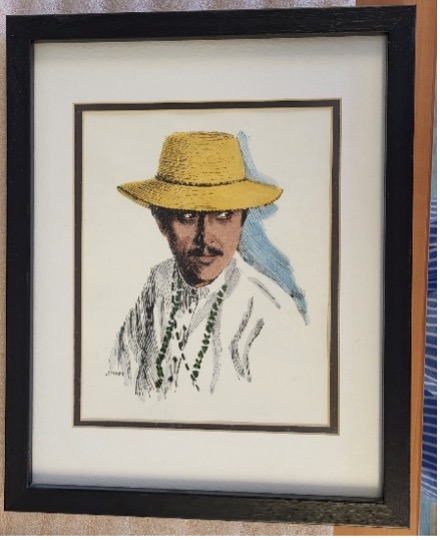
Woman and Man in Traditional Panamanian Dress
Circa 1960s–1980s
Panama
Color prints after watercolor drawings
Gift of Barbara Ellen Seni
Representations of men and women in traditional dress became popular subjects in Panamanian art and the souvenir industry. The woman wears a pollera with elaborate hair ornaments and jewelry, while the man is shown in traditional rural dress with a woven hat.
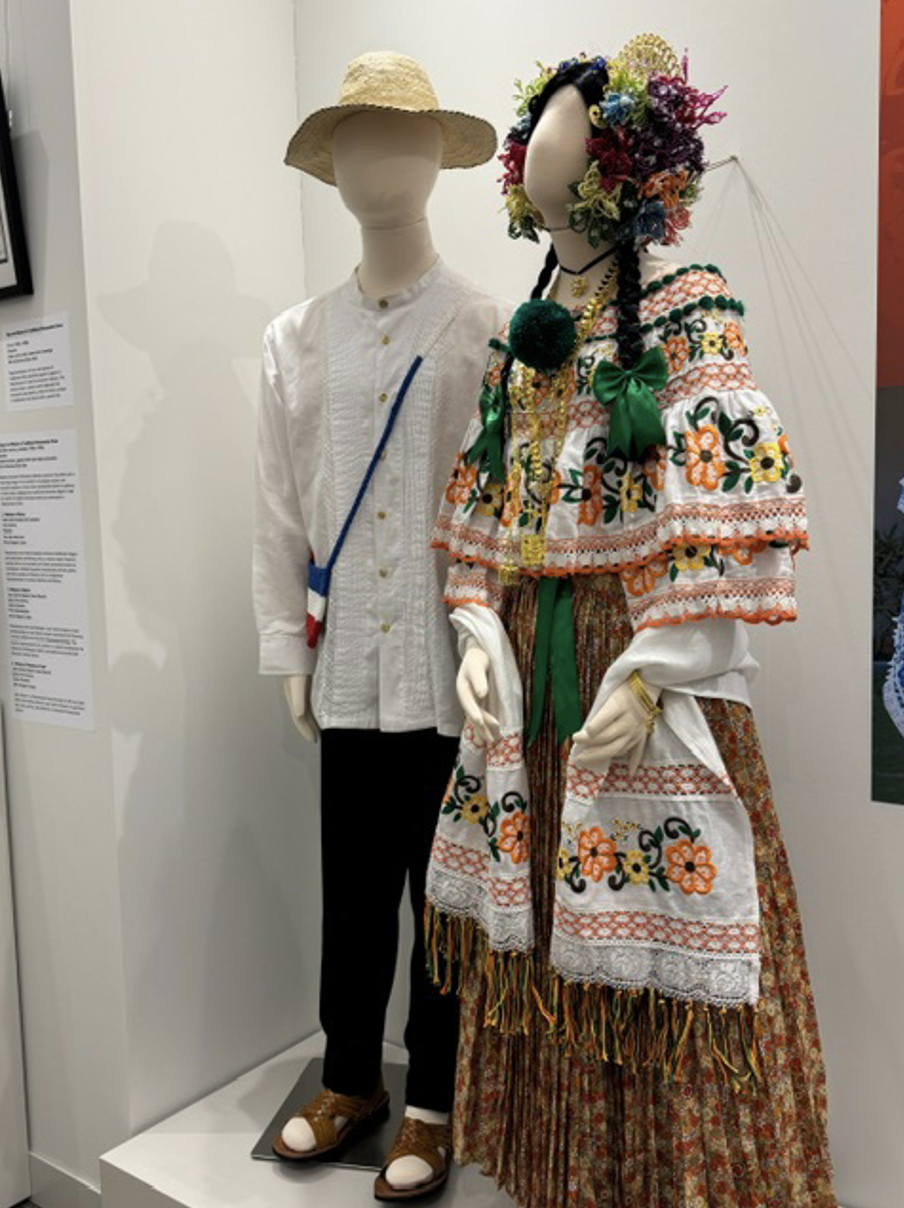
Men’s Traditional Attire
2026
Hat made in La Pintada, Coclé Province
Shirt made in Antón, Coclé Province
Sombrero pintao (traditional woven hat), camisilla antonera (traditional men’s shirt), cutarras (leather sandals), and chácara (woven fiber carrying bag)
Gift of Robert Tuñón and David Tuñón
Leather Sandals (Cutarras)
José Vallalaz
Early 21st century
La Villa de los Santos, Los Santos Province
Gift of Robert Tuñón and David Tuñón
These items are worn together with black dress pants as traditional rural attire. The sombrero pintao is woven from plant fibers with distinctive black geometric patterns and is widely worn during festivals, parades, and national holidays. This hat has 12 vueltas, or full weaves.
Country-style Women’s Festival Dress (Pollera Montuna Santeña)
2026
Los Santos Province (Azuero Peninsula), Panama
Camisa blanca (white shirt), pollerón or falda de zaraza (printed skirt), pañuelito (scarf), tembleques (hair ornaments), and prendas (necklaces)
Gift of Robert Tuñón and David Tuñón
Historically, the polleras of rural women of Los Santos were less elegant than those worn in festivals. Today, however, montuna santeñas, as seen here, can be extraordinarily elaborate when worn for festivals, folkloric performances, and celebrations.
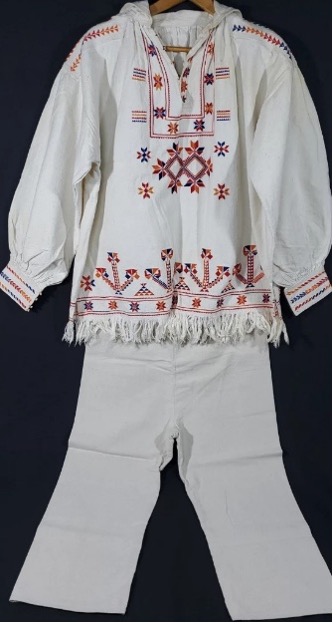
Men's Traditional Attire (Montuno Ocueño)
Early 21st Century
Ocú region, Herrera Province, Panama
Cotton with multicolored embroidery
Loan from Jan Letowski
The montuno (shirt and trousers) originated as rural men's clothing, although they subsequently became ceremonial and folkloric dress, particularly associated with dances and festivals in the Ocú region.
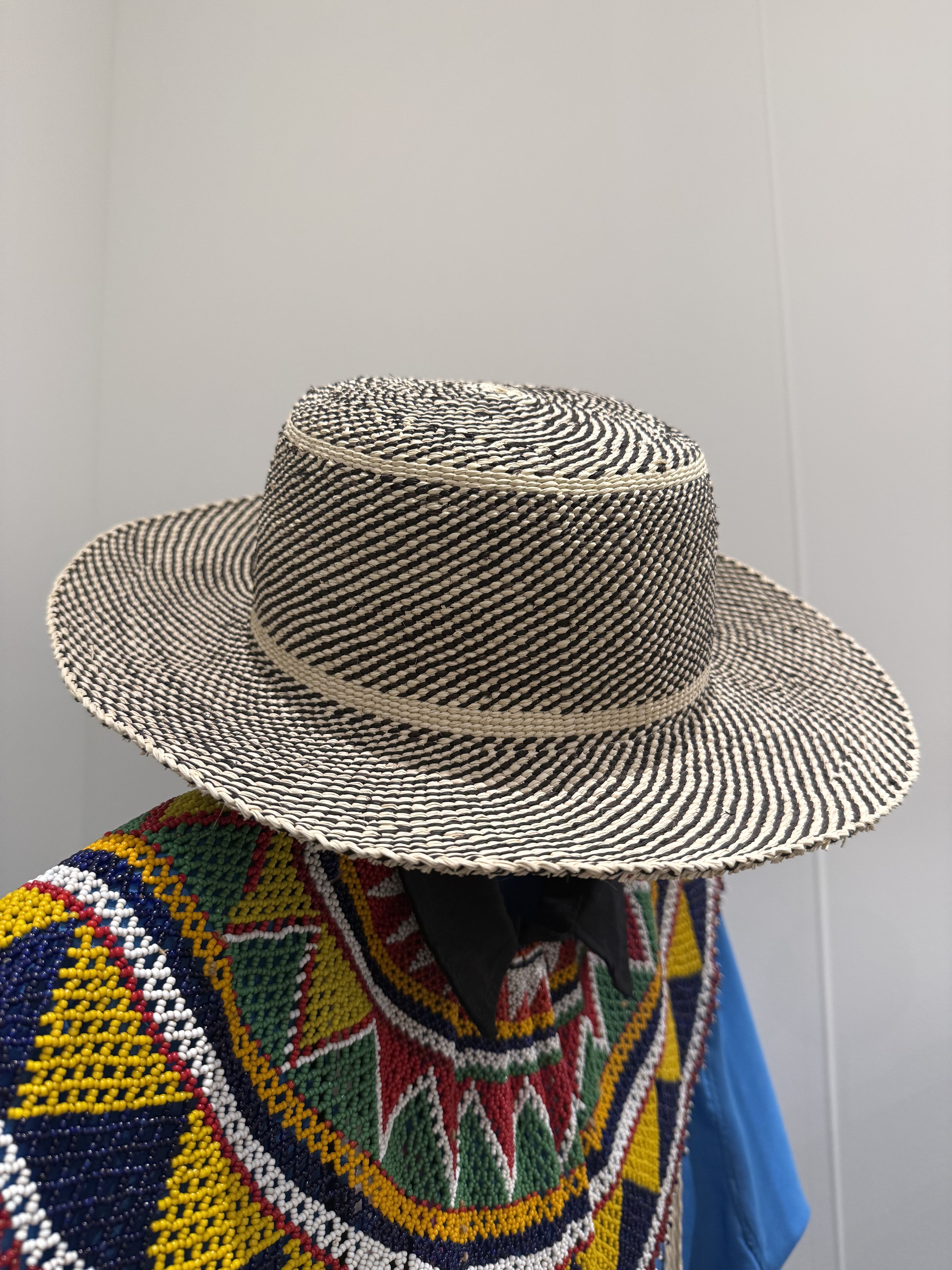
Men’s Traditional Attire
2026
Hat made in La Pintada, Coclé Province
Shirt made in Antón, Coclé Province
Sombrero pintao (traditional woven hat), camisilla antonera (traditional men’s shirt), cutarras (leather sandals), and chácara (woven fiber carrying bag)
Gift of Robert Tuñón and David Tuñón
These items are worn together with black dress pants as traditional rural attire. The sombrero pintao is woven from plant fibers with distinctive black geometric patterns and is widely worn during festivals, parades, and national holidays. This hat has 12 vueltas, or full weaves.
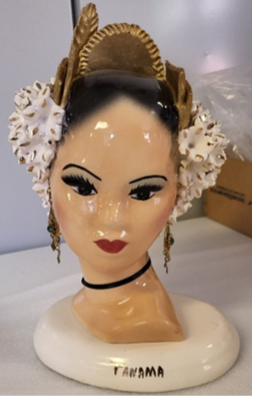
Bust of a Woman in Traditional Panamanian Dress
Mid-20th century, probably 1950s–1970s
Panama
Glazed ceramic, applied shell and metal ornaments
Gift of Barbara Ellen Seni
Women dressed in Panama’s national costume, the pollera, are a recurring image in the country’s art, popular culture, and souvenir traditions. Artists have represented women in polleras in many ways, ranging from traditional decorative figures made for visitors to highly individual works by contemporary Panamanian artists.
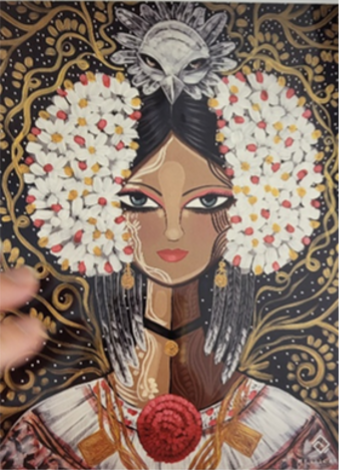
Woman in Pollera
Mario Ariel Saldaña (M. Saldaña)
21st century
Panama
Ink and watercolor
Gift of Barbara Ellen Seni
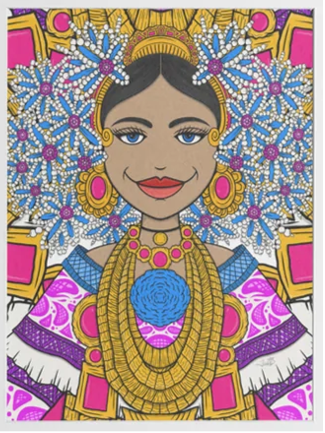
Panamanian artist Mario Saldaña combines traditional imagery with abstraction and fantasy. Here, a woman wears Panama’s national dress, surrounded by the floral ornaments known as tembleques. Saldaña frequently incorporates animals, plants, and other symbols of Panama into his imaginative representations of national identity and folklore.
Woman in Pollera
Jean Carlos Quijano (Jean Decort)
Early 21st century
Colón, Panama,
Print reproduction
Gift of Barbara Ellen Seni
Panamanian artist and designer Jean Carlos Quijano, known professionally as Jean Decort, draws inspiration from Panama's cultural traditions and his Afro-Panamanian heritage. This colorful representation of a woman in a pollera emphasizes the elaborate tembleques, jewelry, and pollera associated with Panama's national dress.
Women of Panama on Scarf
Jean Carlos Quijano (Jean Decort)
Early 21st Century
Colón, Panama
Gift of Barbara Ellen Seni
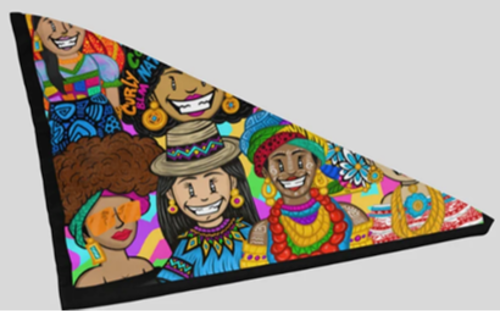
Jean Decort is a Panamanian brand founded in 2014 by Colón artist and creative director Jean Carlos Quijano. Its garments use colors, prints, and patterns to represent Panamanian culture.
Indigenous Dress
Indigenous people in Panama have their own distinctive forms of dress especially in areas that are visited by tourists. Very striking are the costumes of the Embera people that include intricate designs, brightly colored fabrics, beaded tops, and body paint. Guna dresses often include molas—textile art that often includes nature-themed designs. The Ngäbe-Buglé people are known for the chácaras they make from the natural fibers of plants like the wild pineapple.
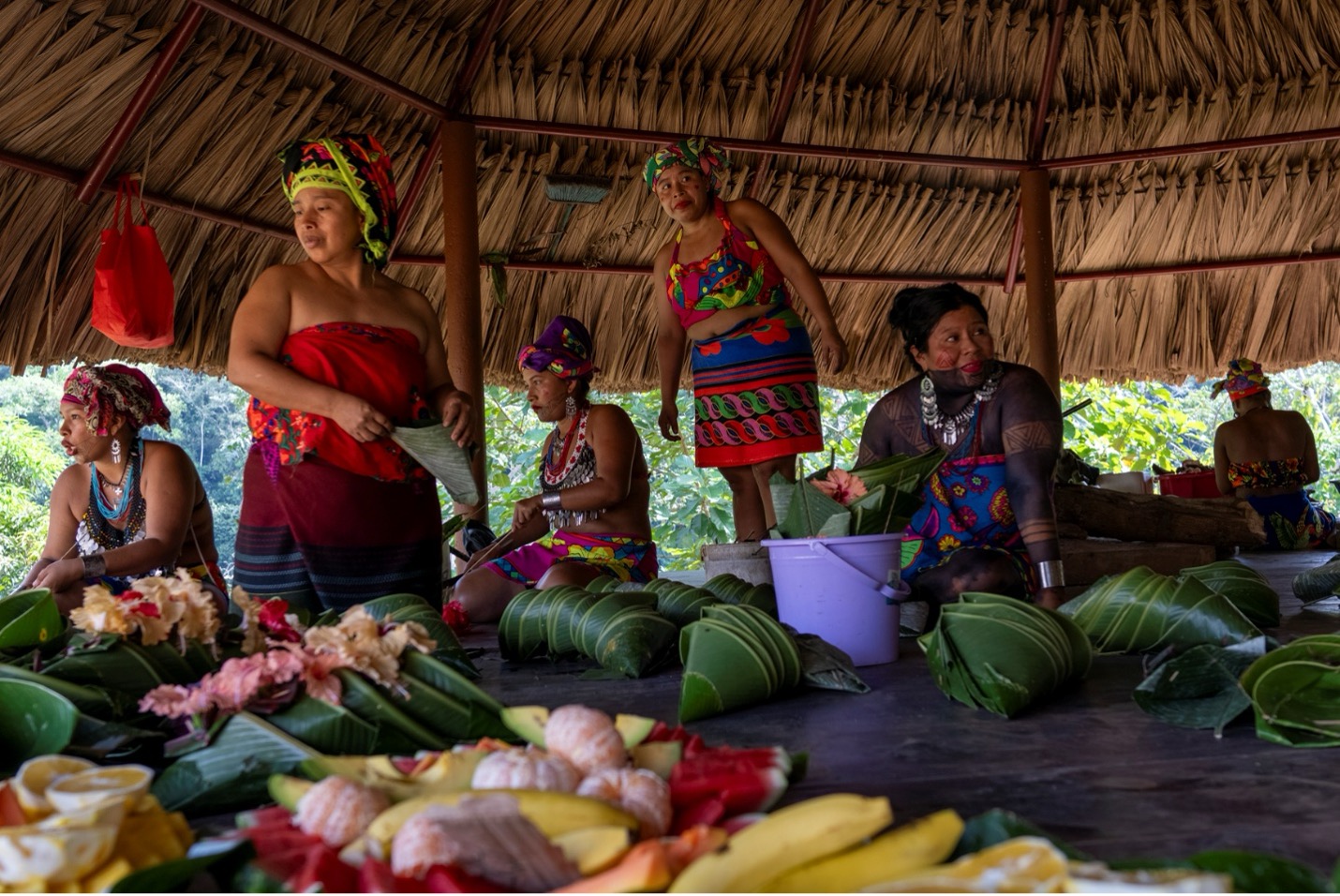
Inside an Emberá-Wounaan Comunal (Tambó) House in the Darién. Photo by Luis Carlos Garcia.
This spacious communal house that is constructed from hardwood posts and a roof thatched with palm leaves is designed for Panama’s rainforest environment. Women are preparing a communal meal using plantains, bananas, and other locally grown foods wrapped in large leaves for cooking and serving.
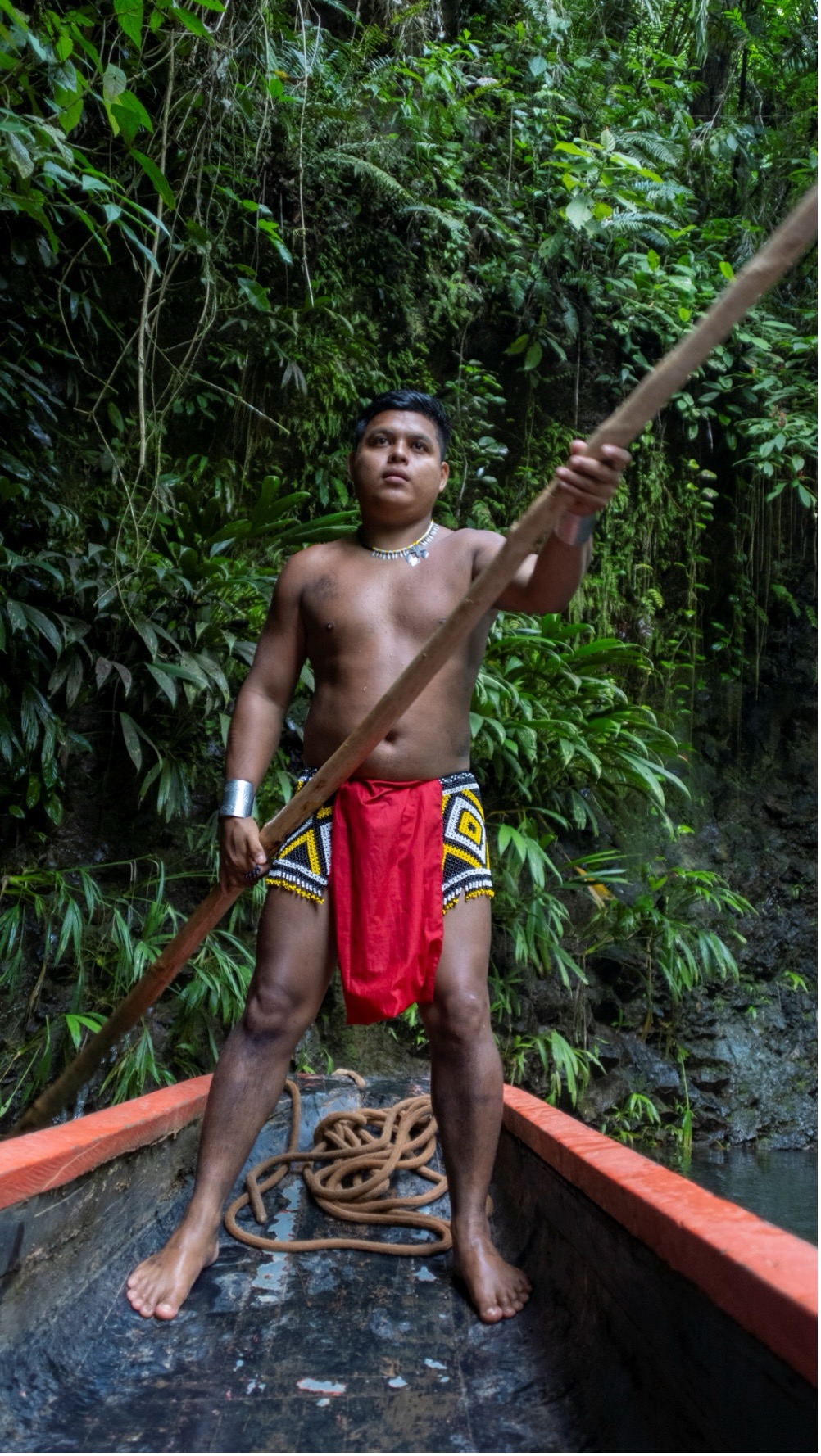
Emberá-Wounaan Boatman. Photo by Luis Carlos Garcia.
Standing in a traditional dugout canoe (piragua), this Emberá-Wounaan man propels the vessel with a long wooden pole through the shallow rivers of the Darien rainforest. His attire reflects traditional ceremonial dress ofen work for cultural presentations and festivals. The brightly beaded belt and loincloth, silver wrist cuffs, and beaded necklace are characteristic of the Emberá region.
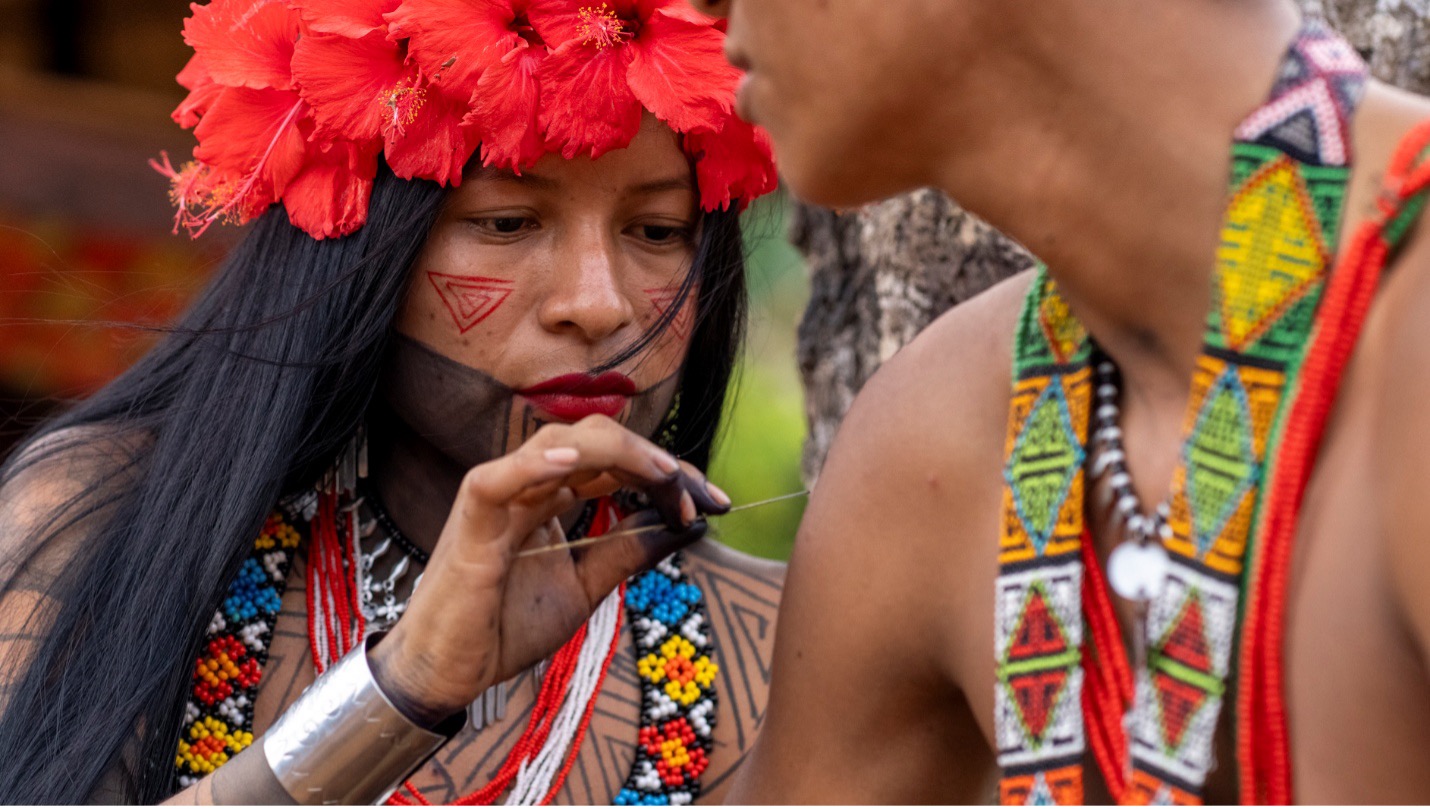
Emberá´Ceremonial Dress and Body Painting. Photo by Luis Carlos Garcia.
Emberá ceremonial attire combines intricate beadwork, fresh floral adornment, and temporary body painting made from the fruit of the jagua tree (Genipa americana). Jagua designs, which can last for weeks, have long been used for decoration, ceremony, and personal expression. The colorful beadwork reflects the artistry of Emberá women and often incorporates geometric motifs inspired by the forests and rivers that define their homeland in the Darin region of Panama.
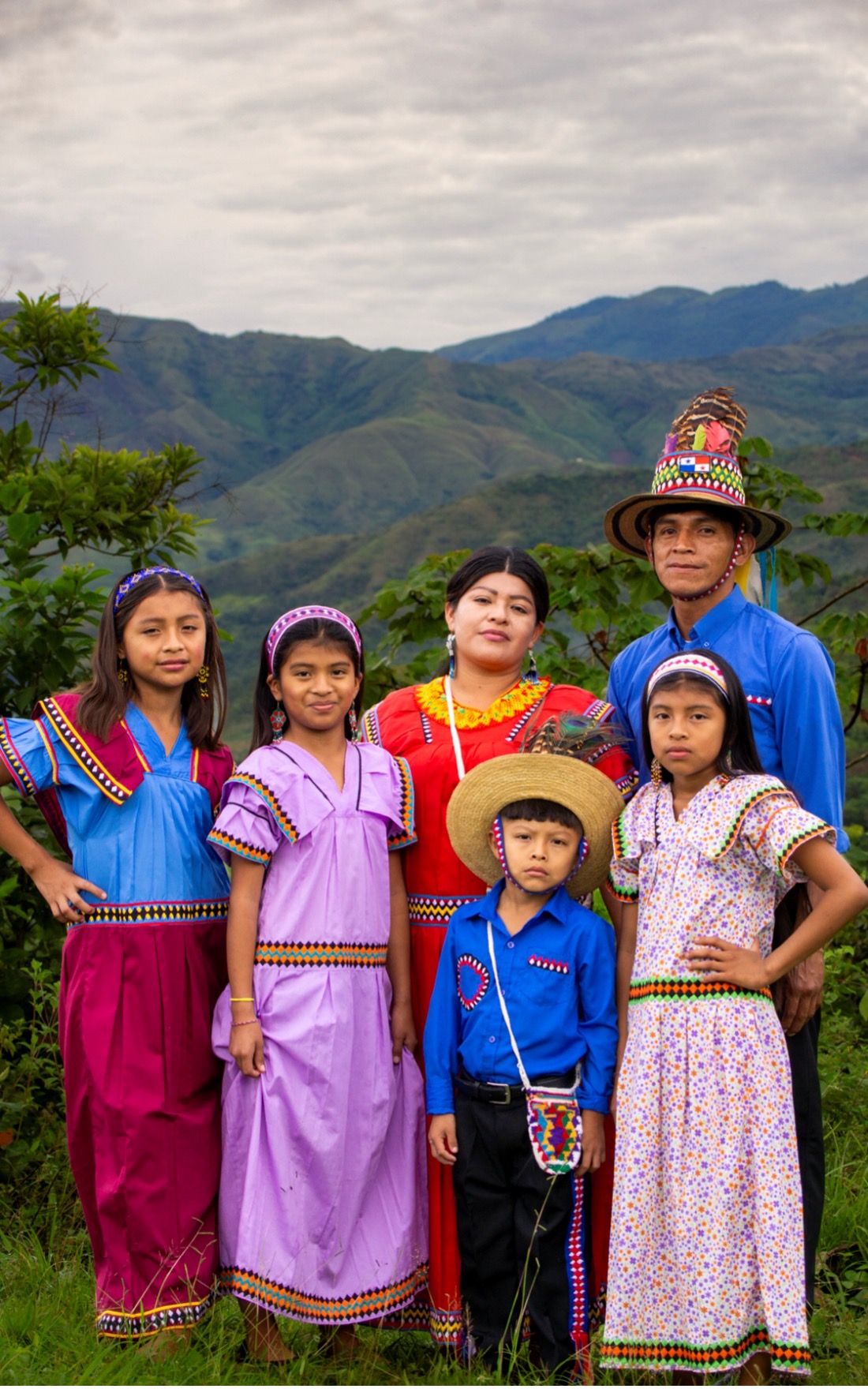
Ngäbe-Buglé Family from Chiriqui Province. Photo by Luis Carlos Garcia.
The distinctive ceremonial hats work by the males are woven from pita, junco, or other palm fibers, using techniques like those used for everyday work hats. The decorations include crests made from the feathers of turkeys, peacocks, and other birds; woven geometric hatbans; and, in the father’s cas, a small Panamanian flag.
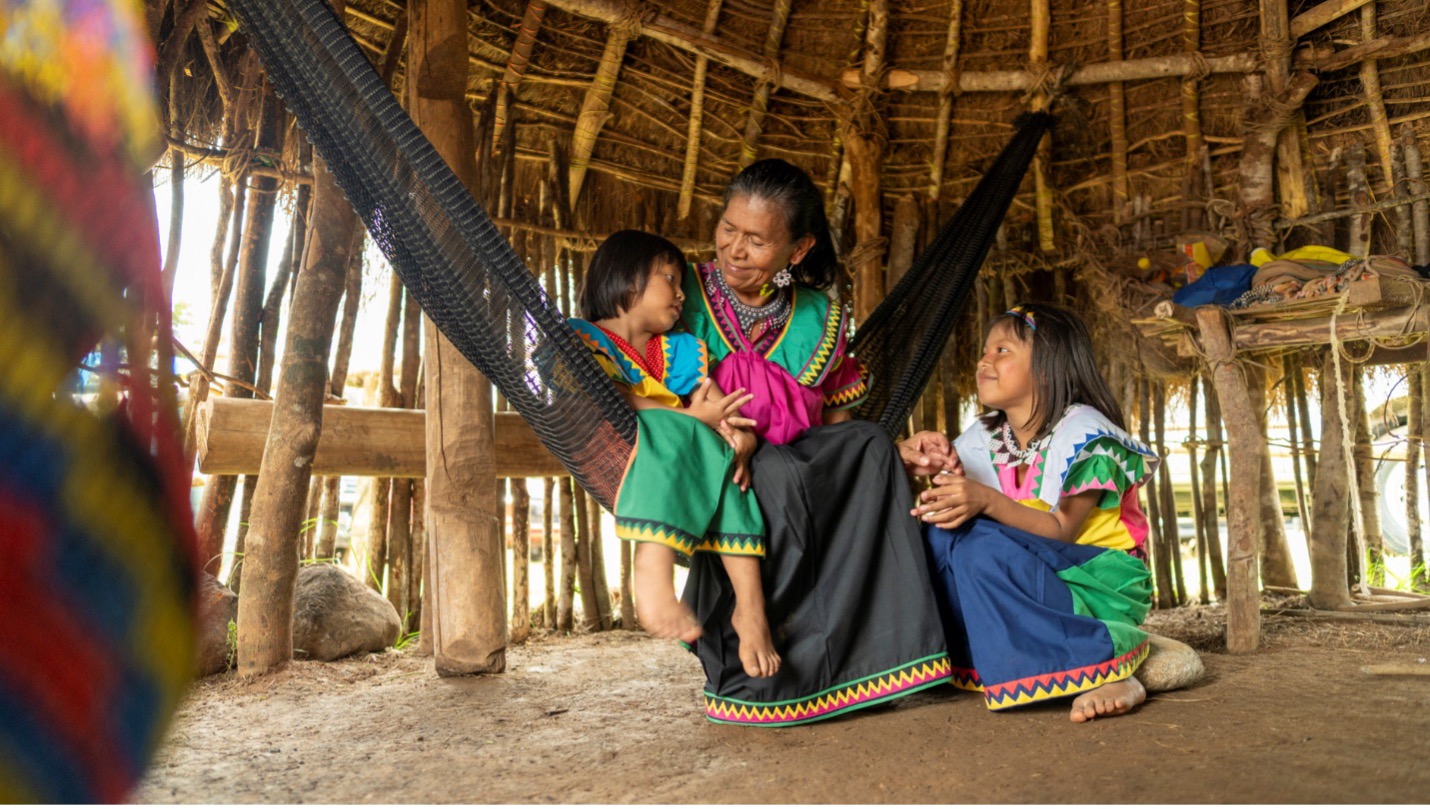
Story-telling in a Ngäbe-Buglé household. Photo by Luis Carlos Garcia.
A grandmother shares her stories with her grandchildren. Houses are made from natural materrials and are often left open for ventilation.
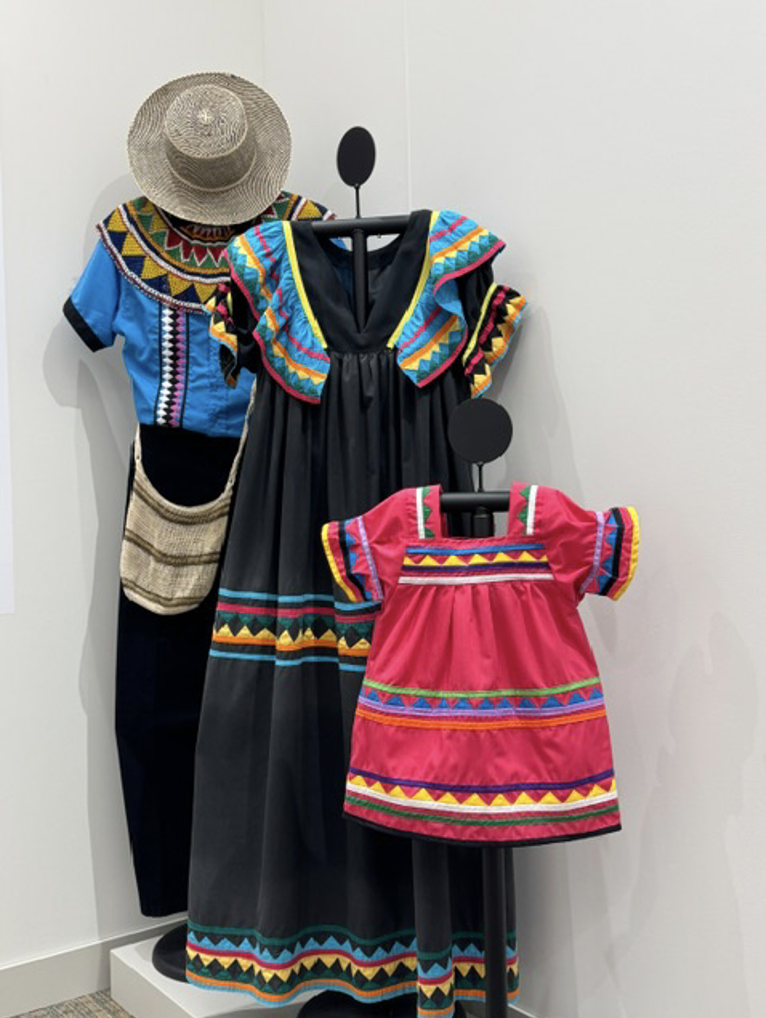
Women’s Dress (Nagua)
Ngäbe-Buglé
Late 20th–early 21st century
Western Panama
Cotton
Gift of Barbara E. Seni
Dresses like this are among the most recognizable forms of Indigenous dress of the Ngäbe-Buglé in Panama. Variations of these dresses remain widely worn today as markers of cultural identity, community affiliation, and Indigenous continuity.
Child’s Dress
Ngäbe-Buglé
Early 21st century
Western Panama
Cotton
Gift of Robert Tuñón
Men’s Shirt and Accessories
Ngäbe-Buglé
Early 21st century
Western Panama
Cotton
LACC Collection
Woven Fiber Bag (Chácara)
Ngäbe-Buglé
Early 21st century
Western Panama
Loan from Luis Carlos García
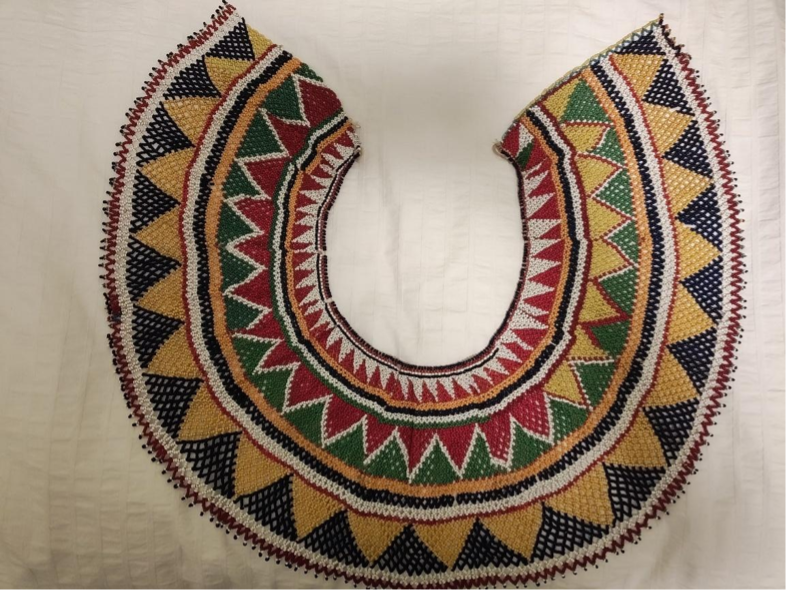
Beaded Necklace
Likely Ngäbe-Buglé
1978
Boquete, Chiriquí Province
LACC Collection
Gift of Kim Follett
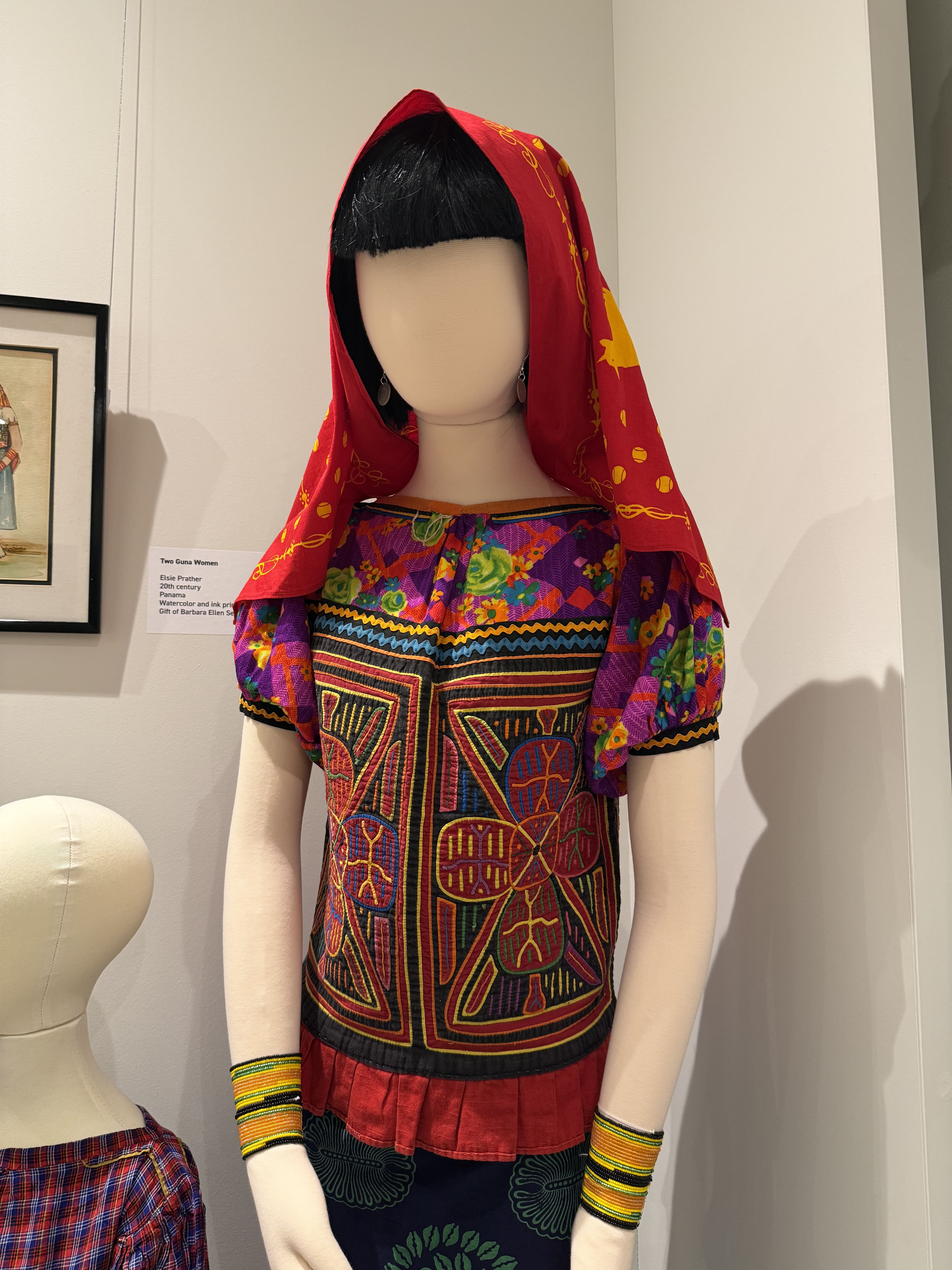
Adult Blouse with Flower Mola
Guna
1990s
Cotton with appliqué and embroidery
LACC Collection
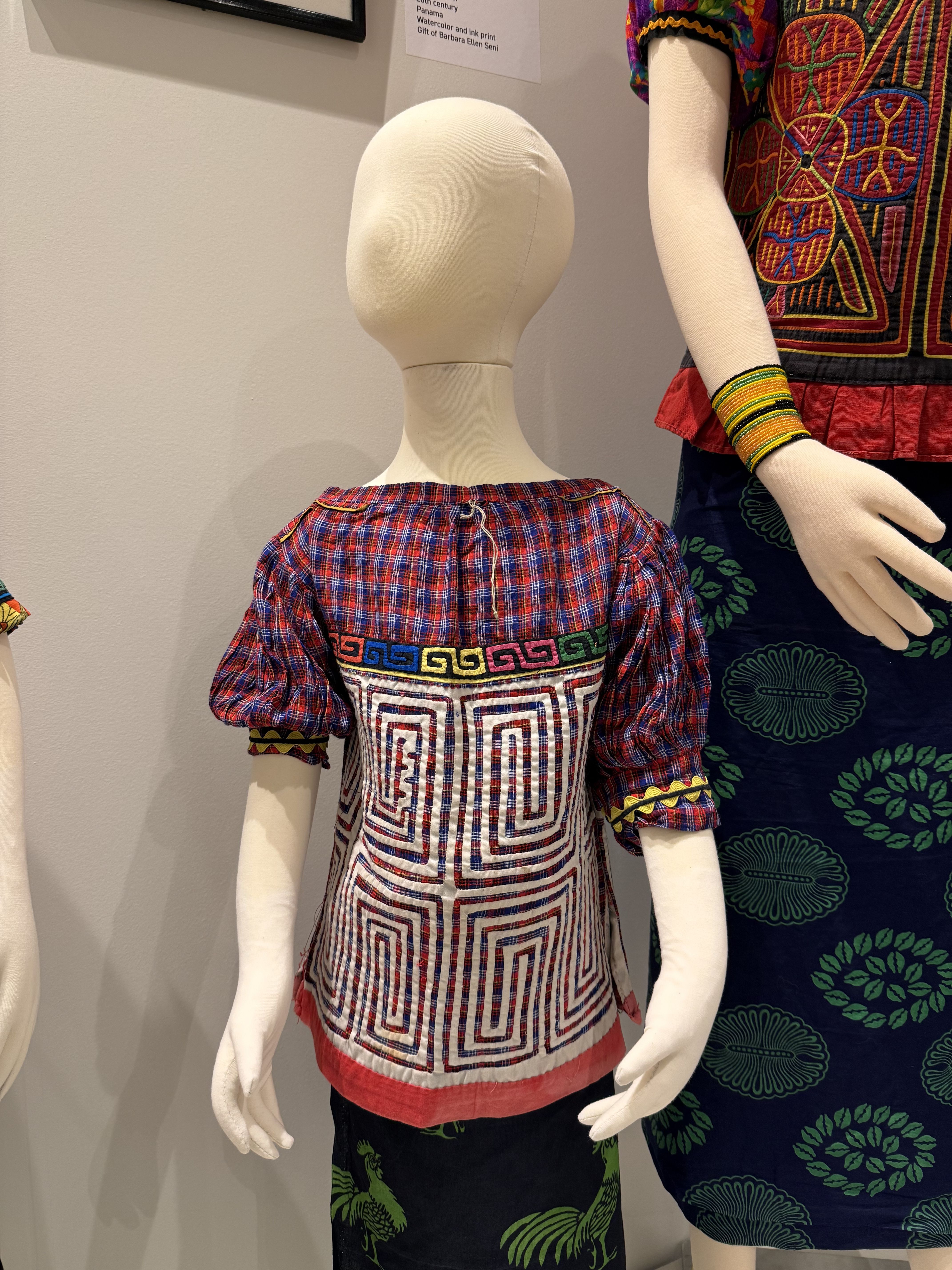
Teen Blouse with Geometric Plaid Mola
Guna
1970s
Cotton with appliqué and embroidery
LACC Collection
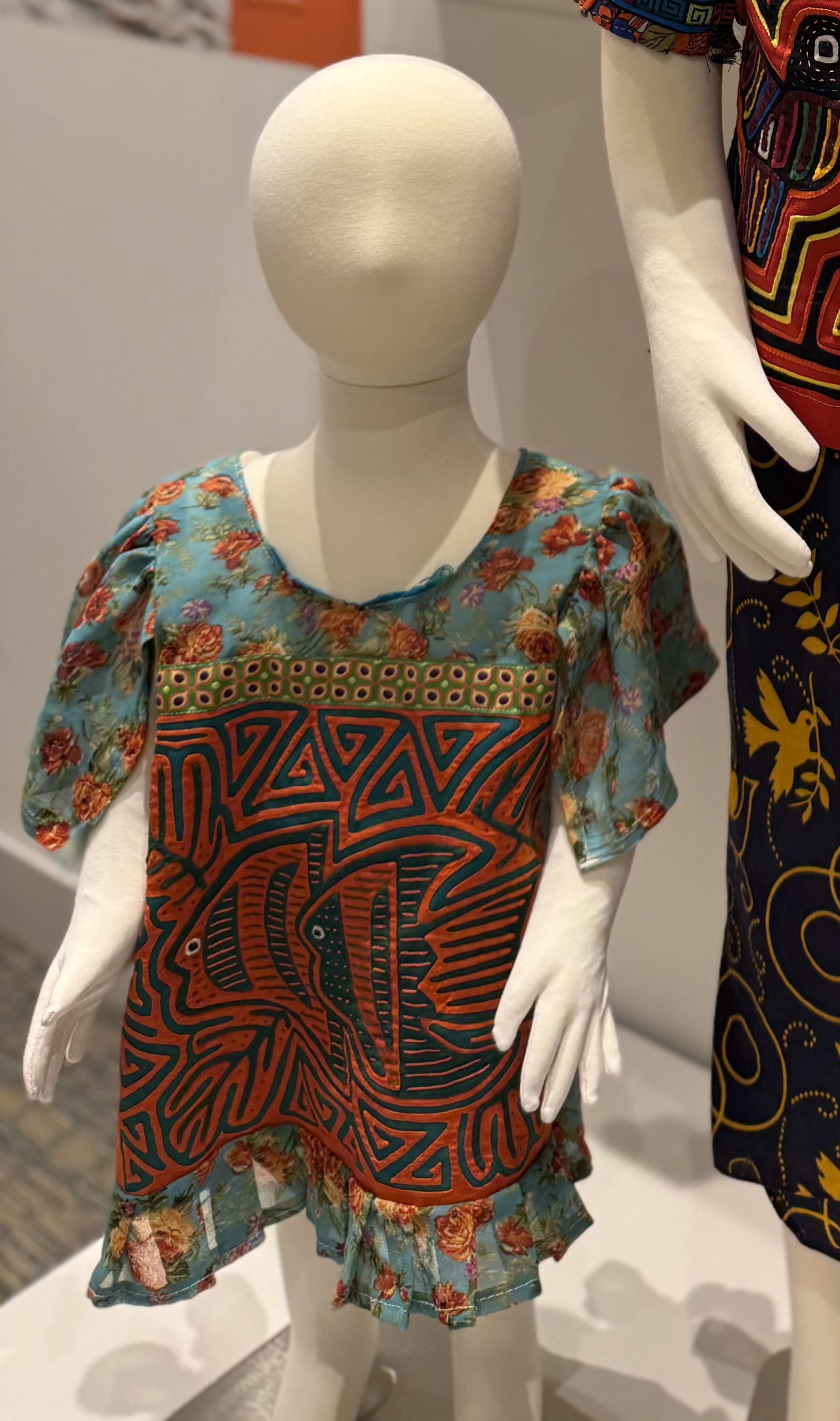
Child’s Blouse with Fish Mola
Guna
2025
Cotton with appliqué and embroidery
Gift of Robert Tuñón and David Tuñón
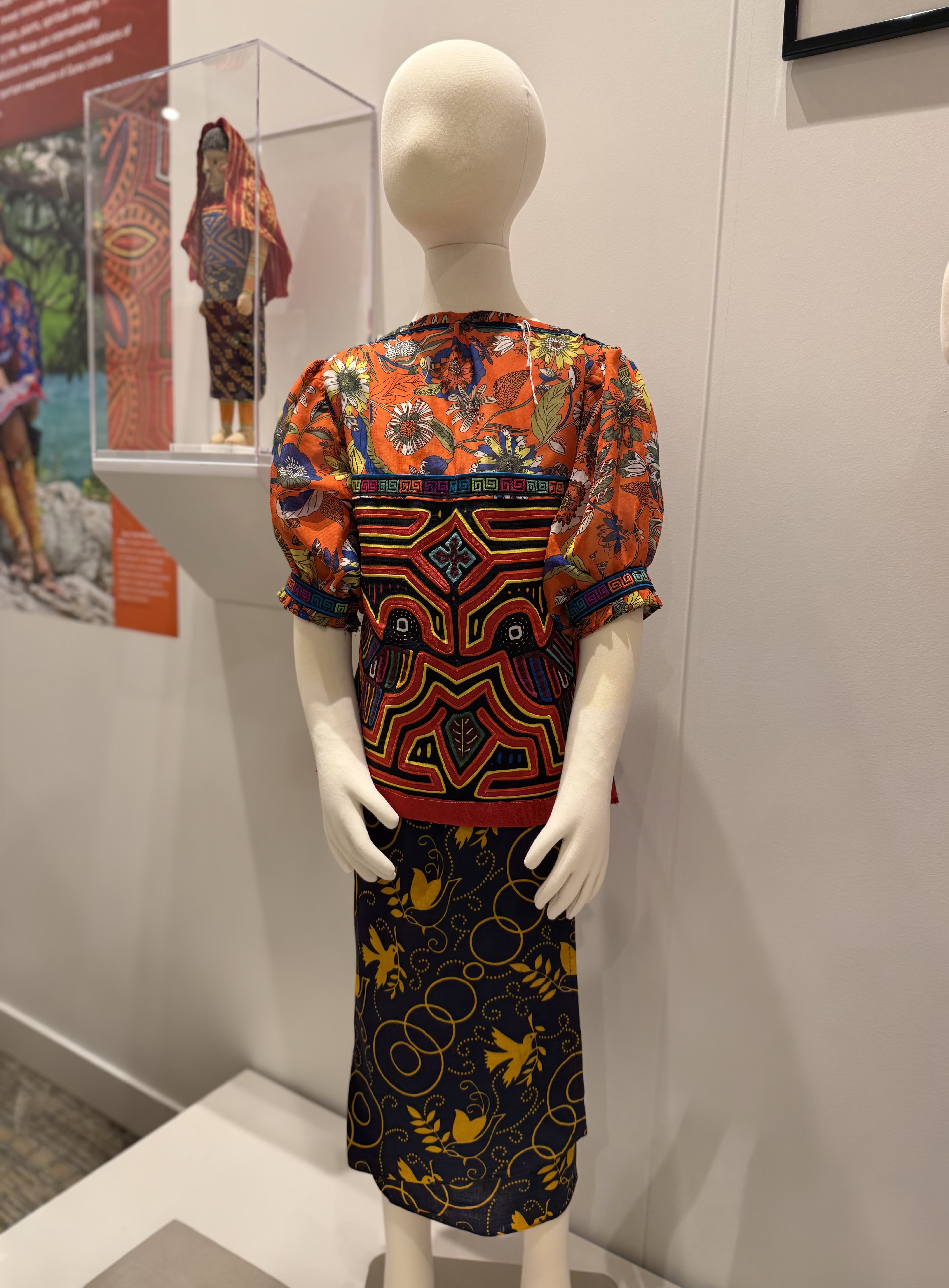
Bird Mola Dress
Marcia Lopez
2022
Cotton with appliqué and embroidery
Guna Yala
LACC Collection
Marcia’s designs featuring bird figures and geometric shapes are inspired by nature and the Guna world views. The colors and figures symbolize the relationship between human beings, nature, and the spiritual world.
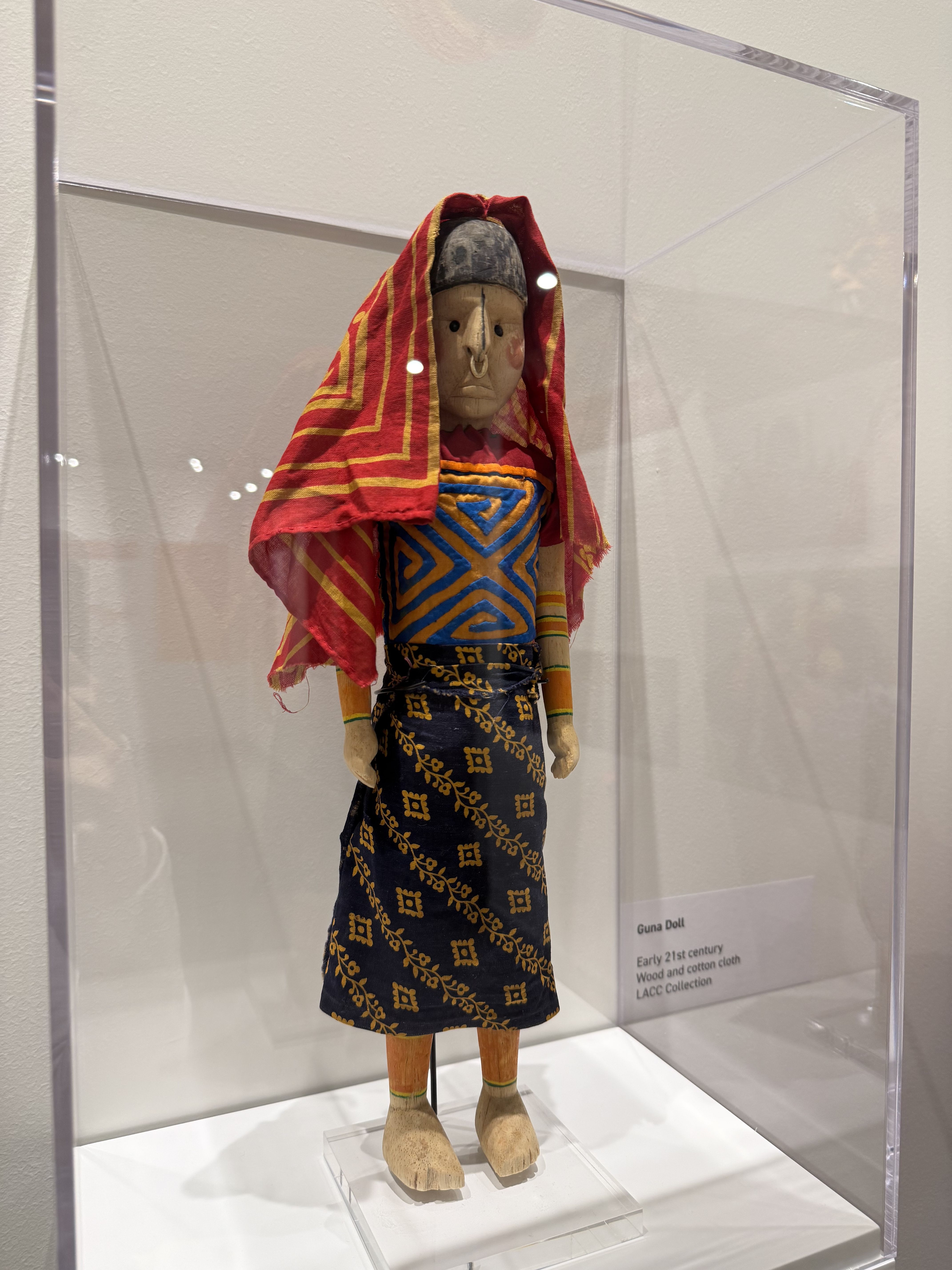
Guna Doll
Early 21st century
Wood and cotton cloth
LACC Collection
Molas: An Indigenous Textile Tradition
Molas are elaborately layered and cut textiles created by Guna women of Panama and northeastern Colombia. Traditionally made as front and back panels for women’s blouses, molas are constructed through a complex reverse-appliqué technique in which multiple layers of colored cloth are cut away and sewn to reveal intricate designs beneath. Patterns may depict geometric motifs, animals, plants, spiritual imagery, or scenes inspired by contemporary life. Molas are internationally recognized as one of the most distinctive Indigenous textile traditions of the Americas and remain an important expression of Guna cultural identity and artistic innovation.
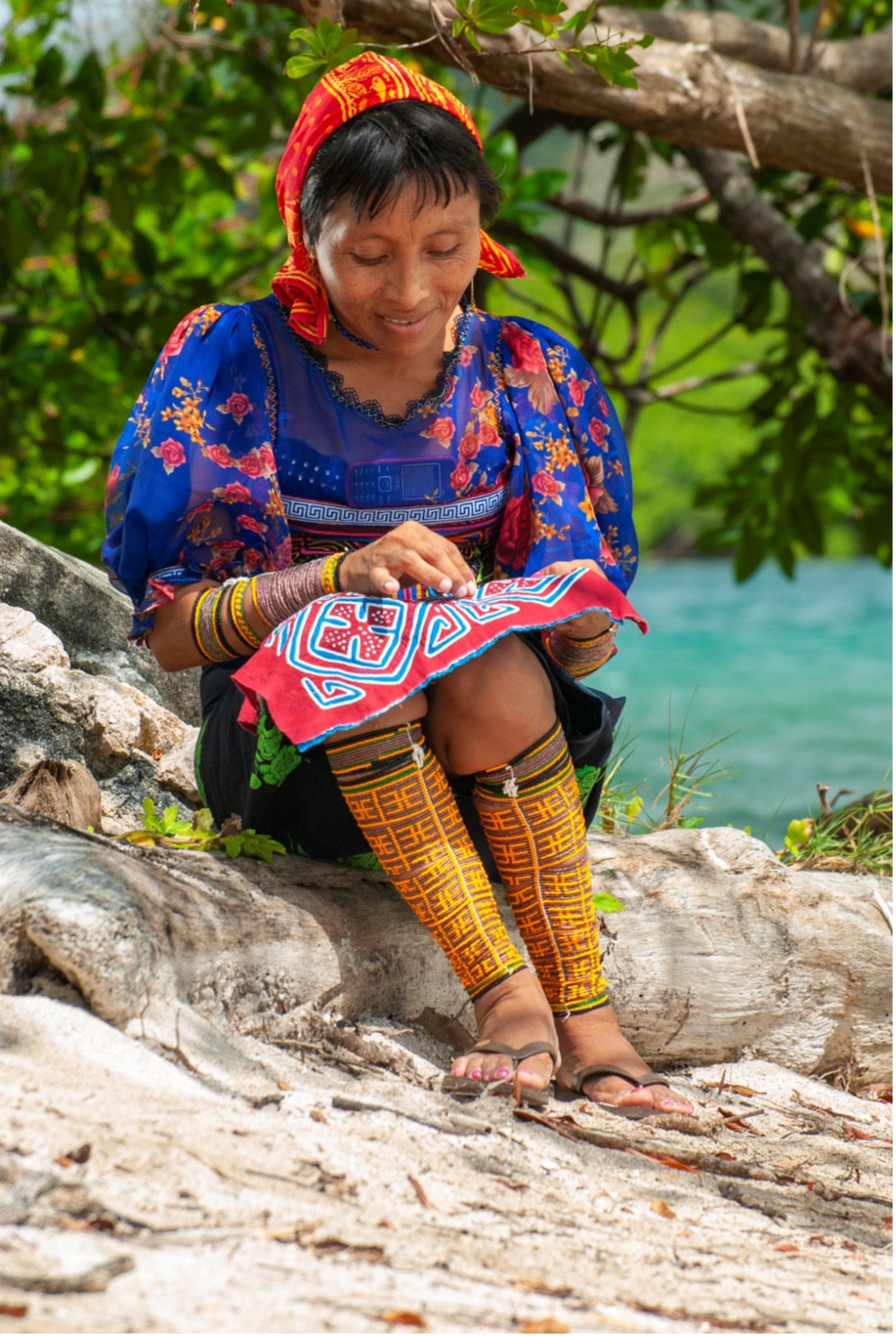
Guna Yala Woman Sewing a Mola. Photo by Luis Carlos Garcia.
Dressed in the distinctive beaded arm and leg bands that are hallmarks of traditional Guna dress, this woman is carefully stitching the multiple layers of colored cotton to create the intricate geometric designs of a mola.
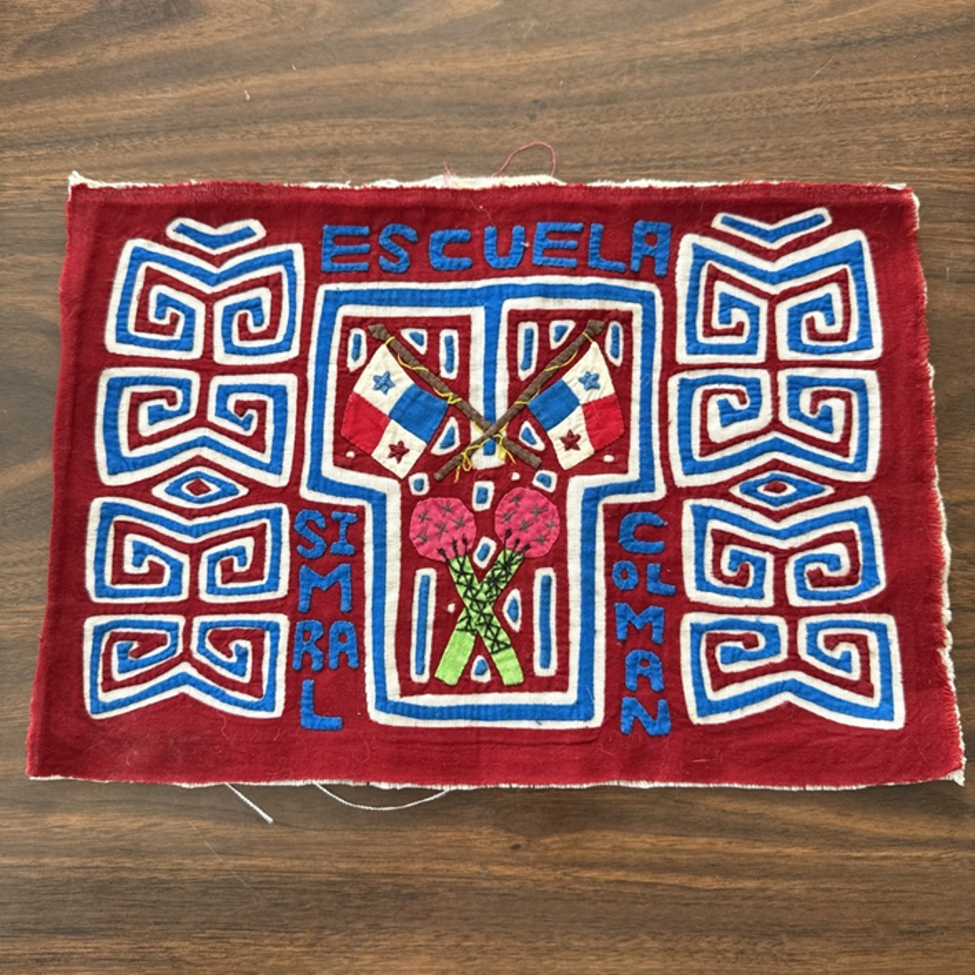
Simral Colman Mola
1990s
Unknown Artist
Guna Yala, Panama
LACC Collection
Molas sometimes are used to commemorate historical events or make political statements. This mola from the 1990s depicts two Panamanian flags and maracas representing a school named Simral Colman in Guna Yala, Panama. Simral Colman, Chief of Ailigandi in the San Blas Islands, was one of the leaders of the San Blas Rebellion in February 1925. The rebellion was an unsuccessful attempt by the Guna people to declare their independence from Panama.
Music: The Sound of Panama
Panama’s music reflects its history as a crossroads of peoples, empires, and oceans. Indigenous, Spanish, African, and Caribbean influences have blended to create traditions that are at once regional and global. In rural areas, festivals keep alive the traditional music of different ethnicities. Panama City became an important hub for salsa in the 20th century. Artists such as Rubén Blades carried Panamanian perspectives onto international stages, blending Afro-Caribbean rhythms with socially conscious lyrics. In 2003, Grammy winner Danilo Pérez established the Panama Jazz Festival, which has become a major cultural platform in Latin America.
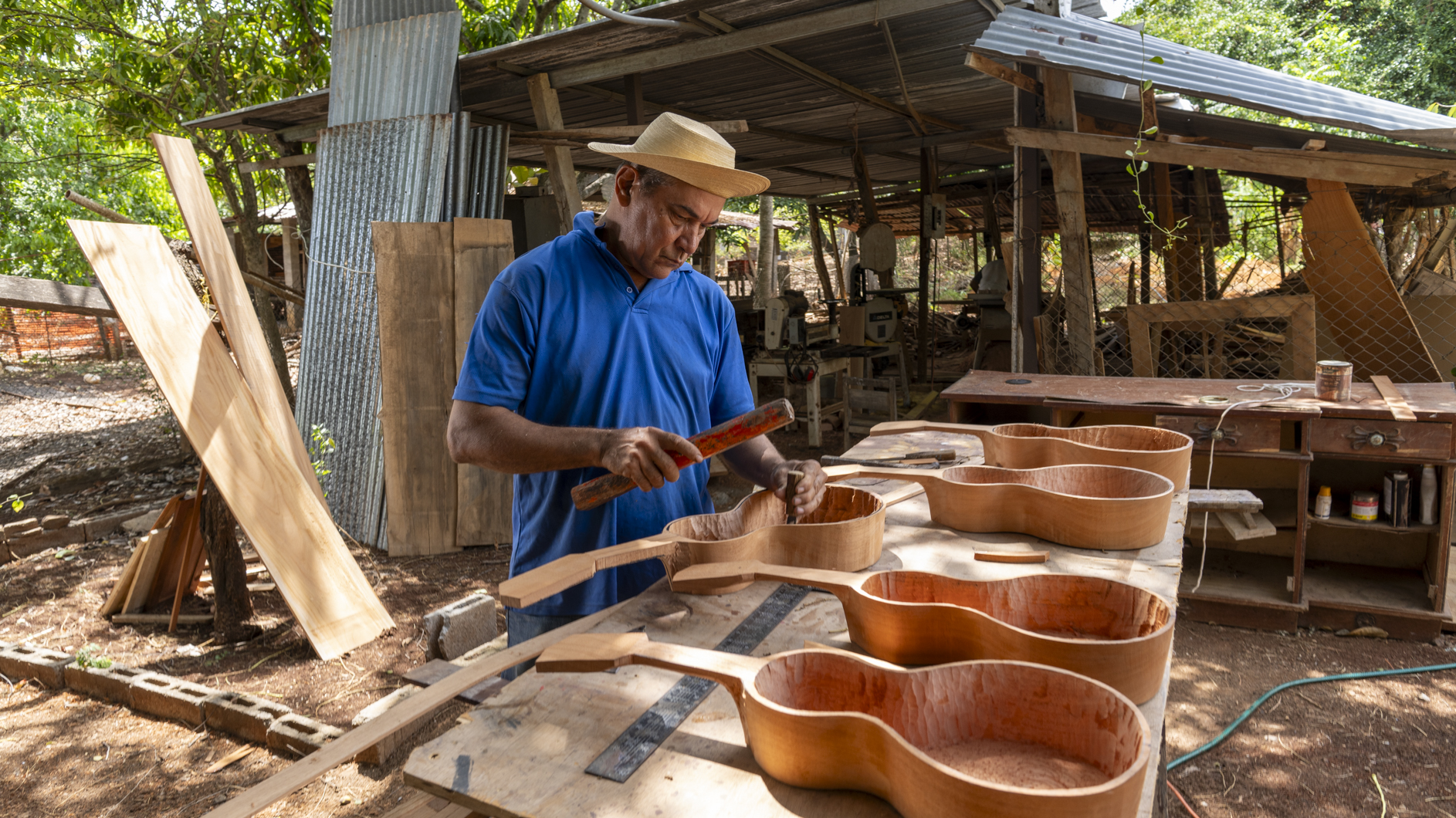
Man making mejorana. Photo by Luis Carlos Garcia.
The Festival Nacional de la Mejorana (a small five string guitar) has been held annually in Guararé since 1949. The festival celebrates and helps to preserve the traditional music, dance, and dress from Panama’s rural provinces. Important for preserving the country’s cultural identity, the festival showcases polleras, sombreros pintao, and décima poetry. The latter consists of ten lines of poetry with each line containing eight syllables and is usually sung accompanied by the mejorana. Musical duels (cantaderas) between two singers improvising décimas in alternation are a highlight of the festival.
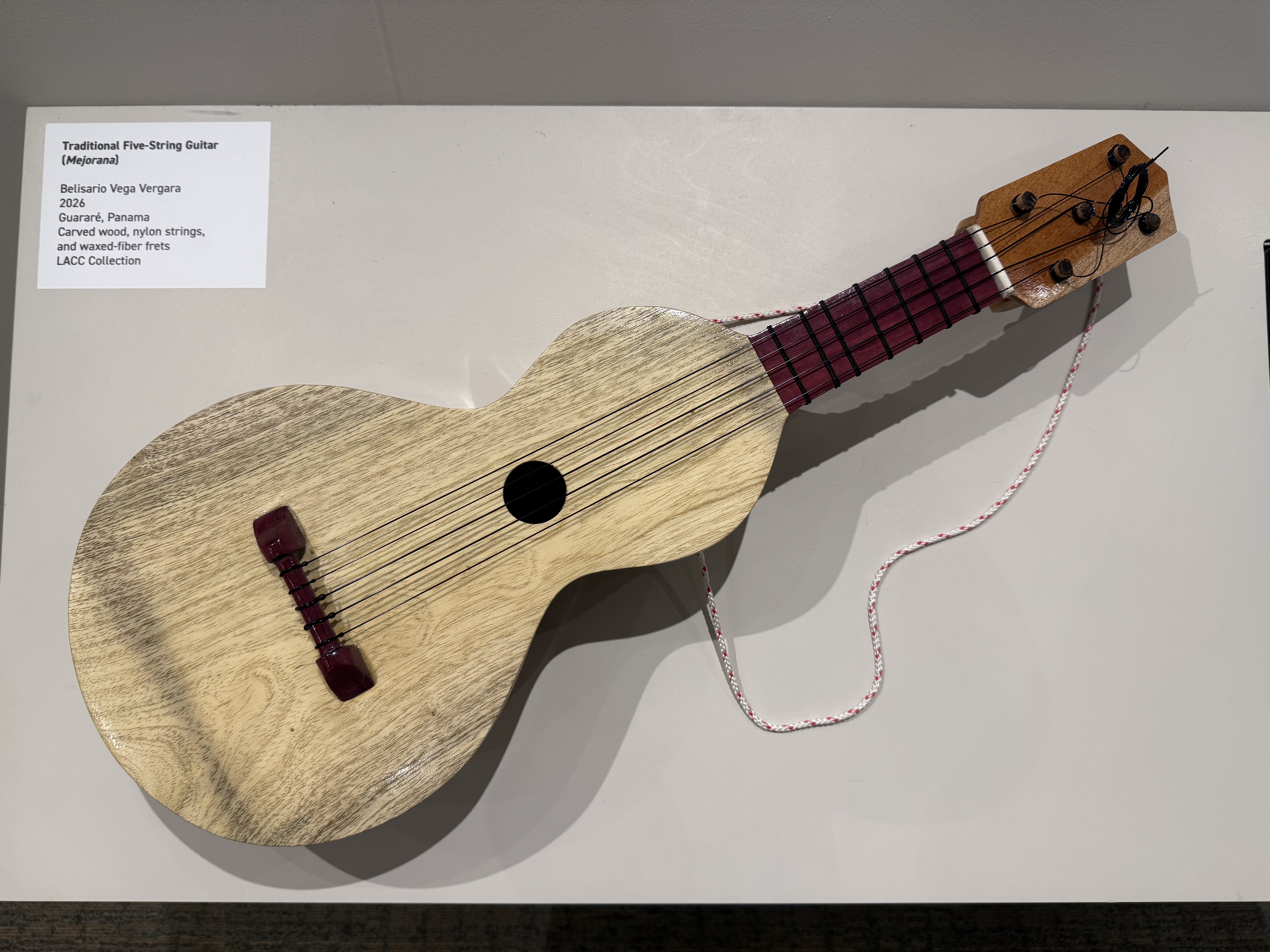
Traditional Five-String Guitar (Mejorana)
Belisario Vega Vergara
2026
Guararé, Panama
Carved wood, nylon strings, and waxed-fiber frets
LACC Collection
Festivals
Carnaval is Panama’s largest and most exuberant celebration, held in the four days before Ash Wednesday. Festivities occur nationwide but the most popular takes place in Las Tablas (Los Santos Province) where there are elaborate parades, fireworks, and queen competitions. Celebrations are accompanied by animated traditional music genres like murga and tamborito as well as lively dances that showcase the country’s diverse cultural influences.
Panama’s African heritage is nowhere more in evidence than in the festivals, museums, and activities held in Portobelo. The culture there is so rich that it has been declared an Intangible Cultural Heritage of Humanity by UNESCO. October 21 is a time when thousands of pilgrims gather for the Festival of the Black Christ of Portobelo. The solemn nighttime procession through narrow streets transforms the town into a space of collective devotion and emotional intensity. A more lively time occurs during Carnaval when the city hosts the Festival of Diablos y Congos. Masked “devils” represent colonial oppressors, while Congo queens and kings symbolize the resilience and dignity of Afro-descendant communities.
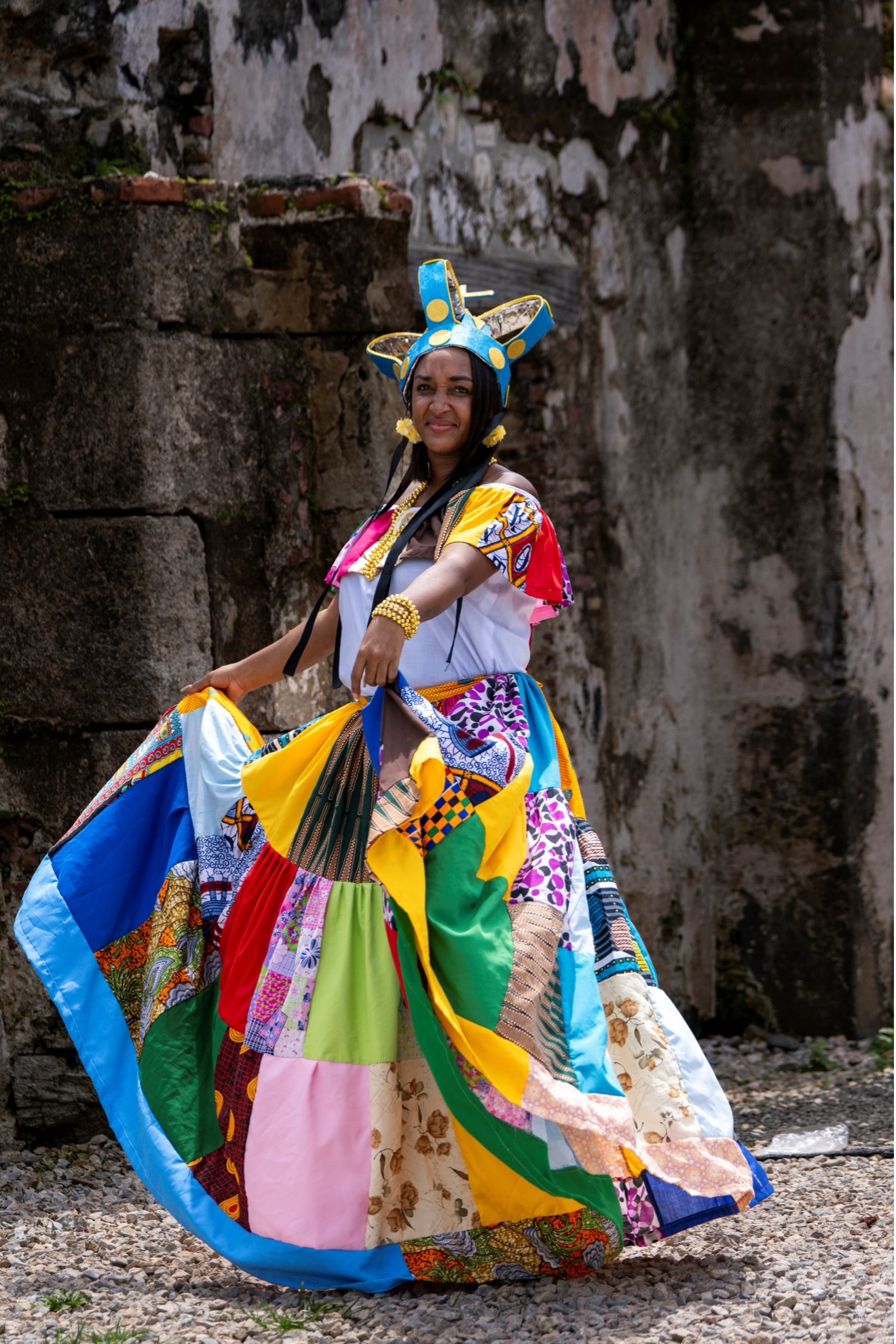
Queen of the Congo Festival. Photo by Luis Carlos Garcia.
She is the symbolic ruler of the theatrical world of the Congo dances of the Afro-Panamanian festival in Portobelo. Her colorful patchwork skirt contains many different fabrics and patterns. Her striking blue and gold crown is highly stylized.
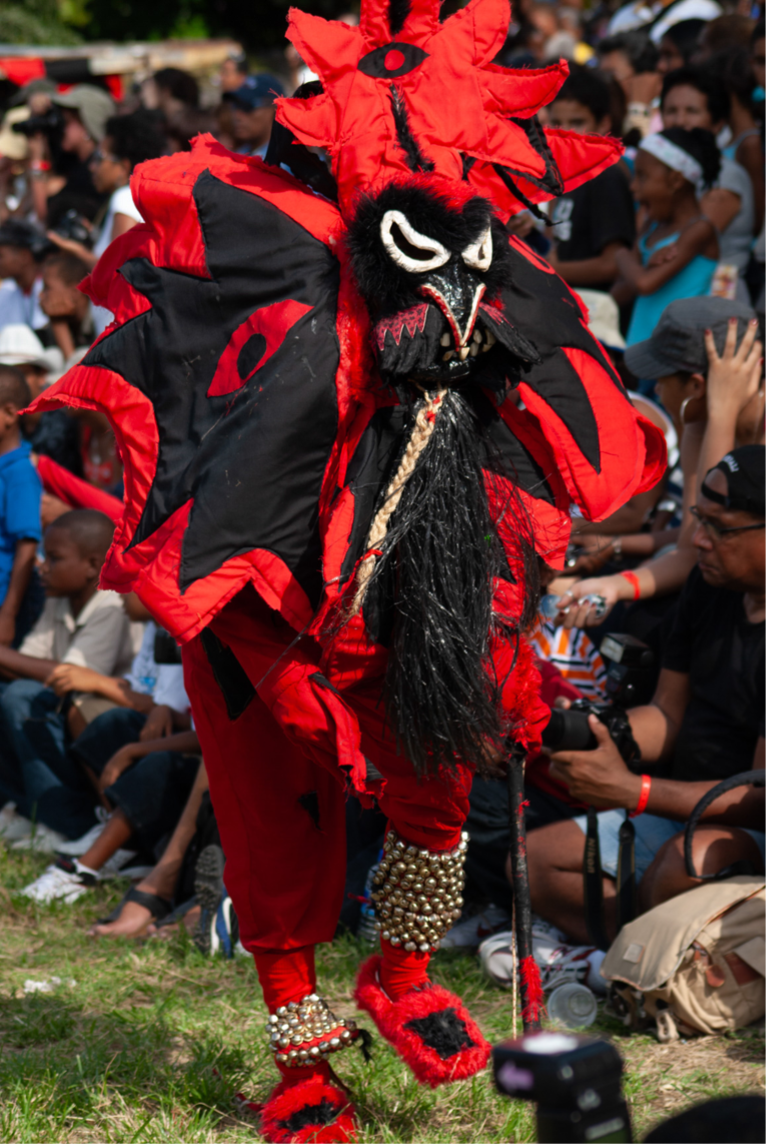
Diablo Tun Tun during the Congo Carnival in Portobelo (Colón Province). Photo by Luis Carlos Garcia.
The Congo Carnival is rooted in the history of enslaved Africans and maroon (cimarrón) resistance during the colonial period. It combines music, dance, theater, satire, and oral tradition to commemorate the struggle for freedom. Congo devils like Tun Tun represent the slave masters and oppression of colonial times.
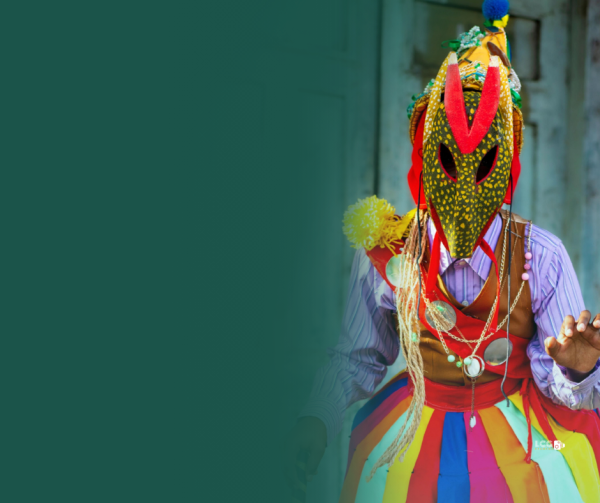
Corpus Christi (Body of Christ) is a festival that was introduced during the Spanish colonial period but has evolved in Panama into a powerful fusion of Catholic ritual and local performance culture. Celebrated in many communities, the festivals feature Diablicos Sucios (dirty devils), dancers dressed in striking red-and-black costumes. Their elaborate masks depict fierce, horned faces symbolizing evil. The devils challenge authority but are ultimately defeated by religious figures.
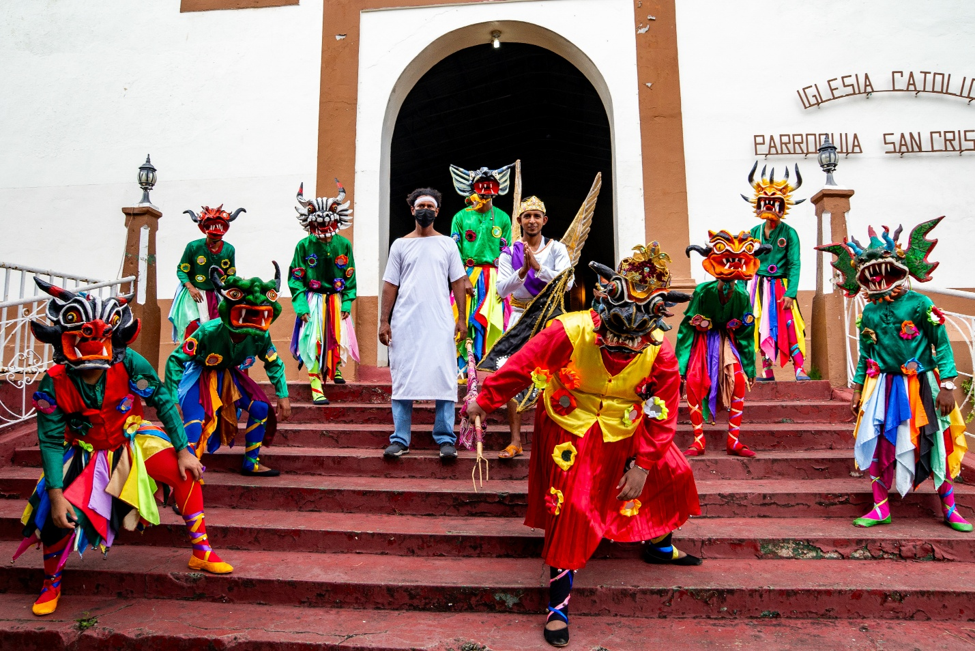
Diablos (Devils) dancing in front of the church in the town of Chepo. Photo: Luis Carlos Garcia
The Dance of the Great Devil of Chepo is one of Panama's oldest and most elaborate Corpus Christi celebrations.
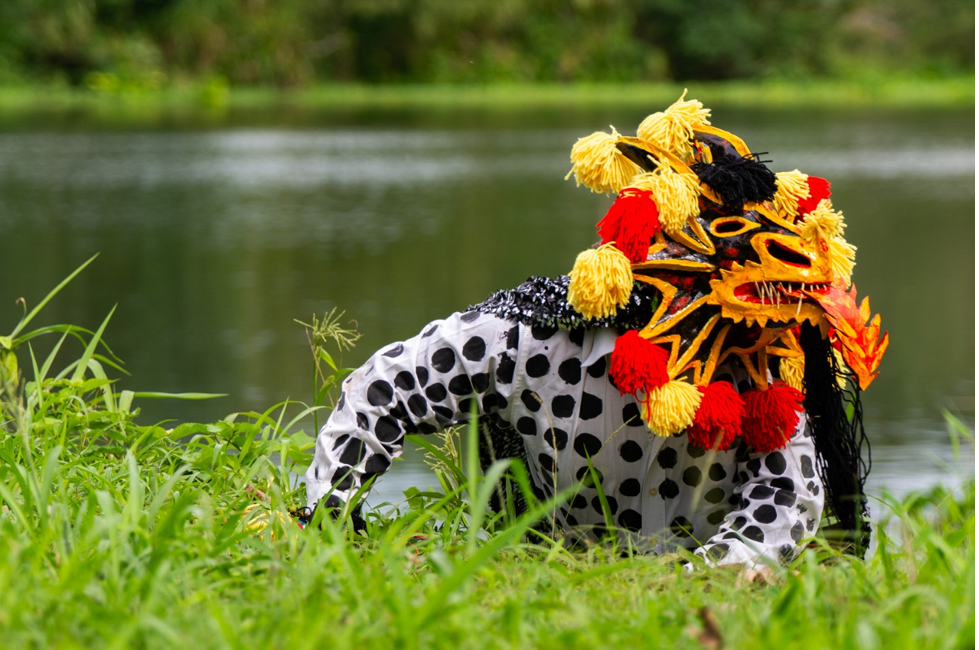
Diablico Sucio – Cocodrilo (Crocodile) from the Corpus Christi Festival, Guayabalito, Santa Rosa, Colón Province, Panama. Photo by Luis Carlos Garcia
Unlike other Panamanian Corpus Christi devil traditions, where performers represent demons, the Guayabalito dance depicts animals that, according to local tradition, were transformed from Lucifer's followers after their expulsion from Heaven. During the ritual performance, these creatures emerge from the forest and are pursued by the Perro (Dog) before the troupe gathers to perform before the Blessed Sacrament. The tradition combines Catholic religious drama with local folklore and the rich wildlife of Panama's Caribbean forests.
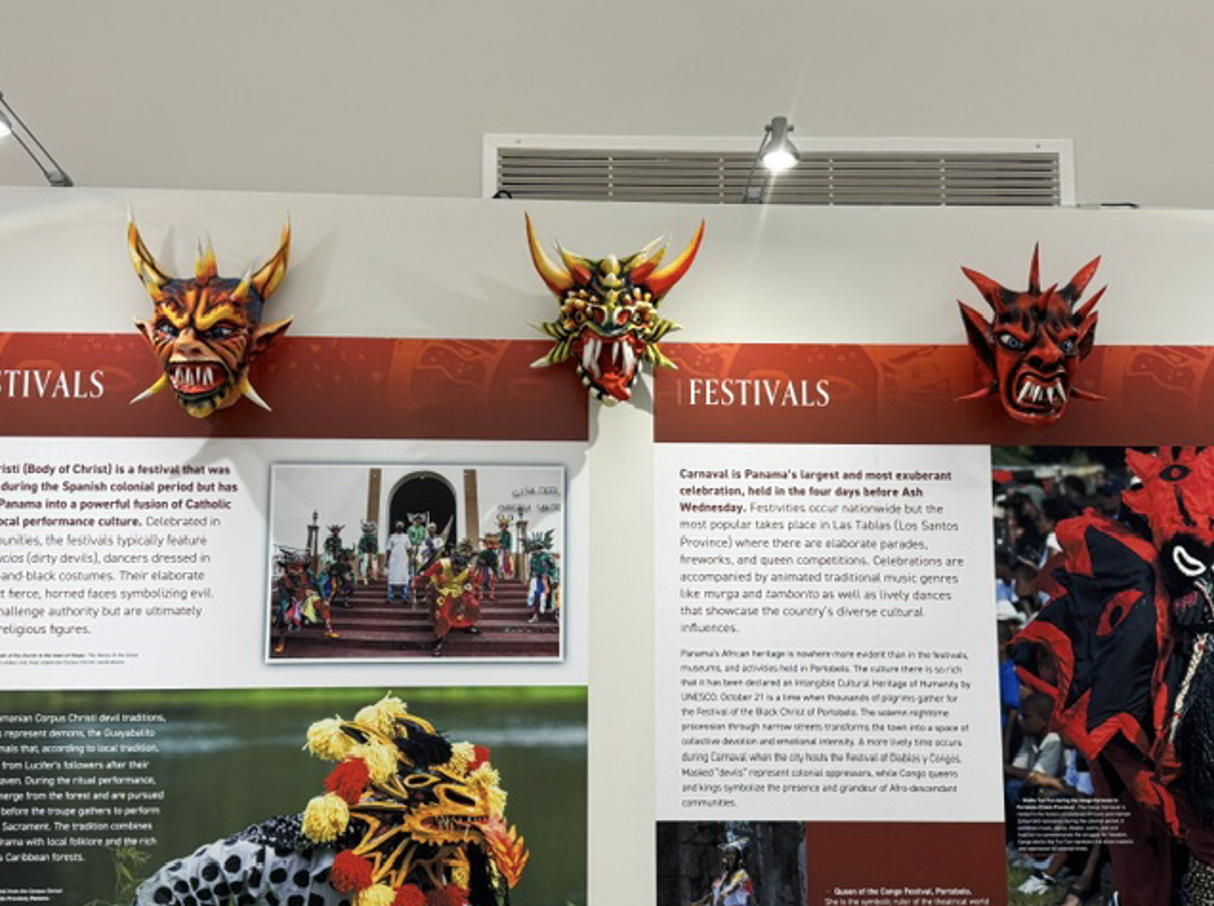
Masks
Jose González
2021
Chitré, Herrera Province
Papier Mache and Paint
Loan from Luis Carlos García
Declared part of Panama’s national heritage, the sombrero pintao (painted hat) is the best-known traditional hat. The hats feature distinctive black geometric patterns woven into a natural plant fiber background. is woven from plant fibers. They are worn by men with the traditional rural attire known as montuno especially during festival, parades, and national holidays.
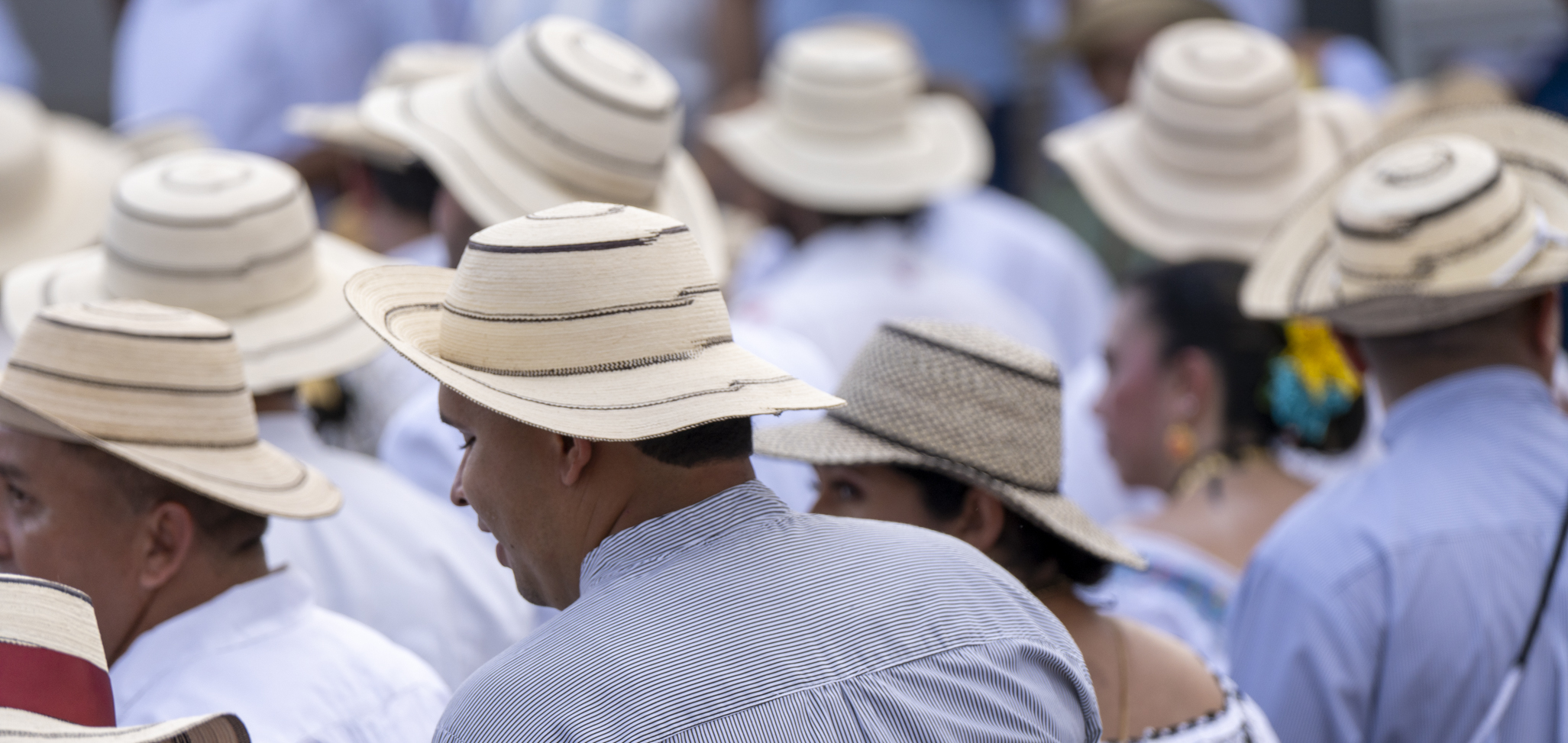
Painted Panama Hats
Photo: Luis Carlos Garcia
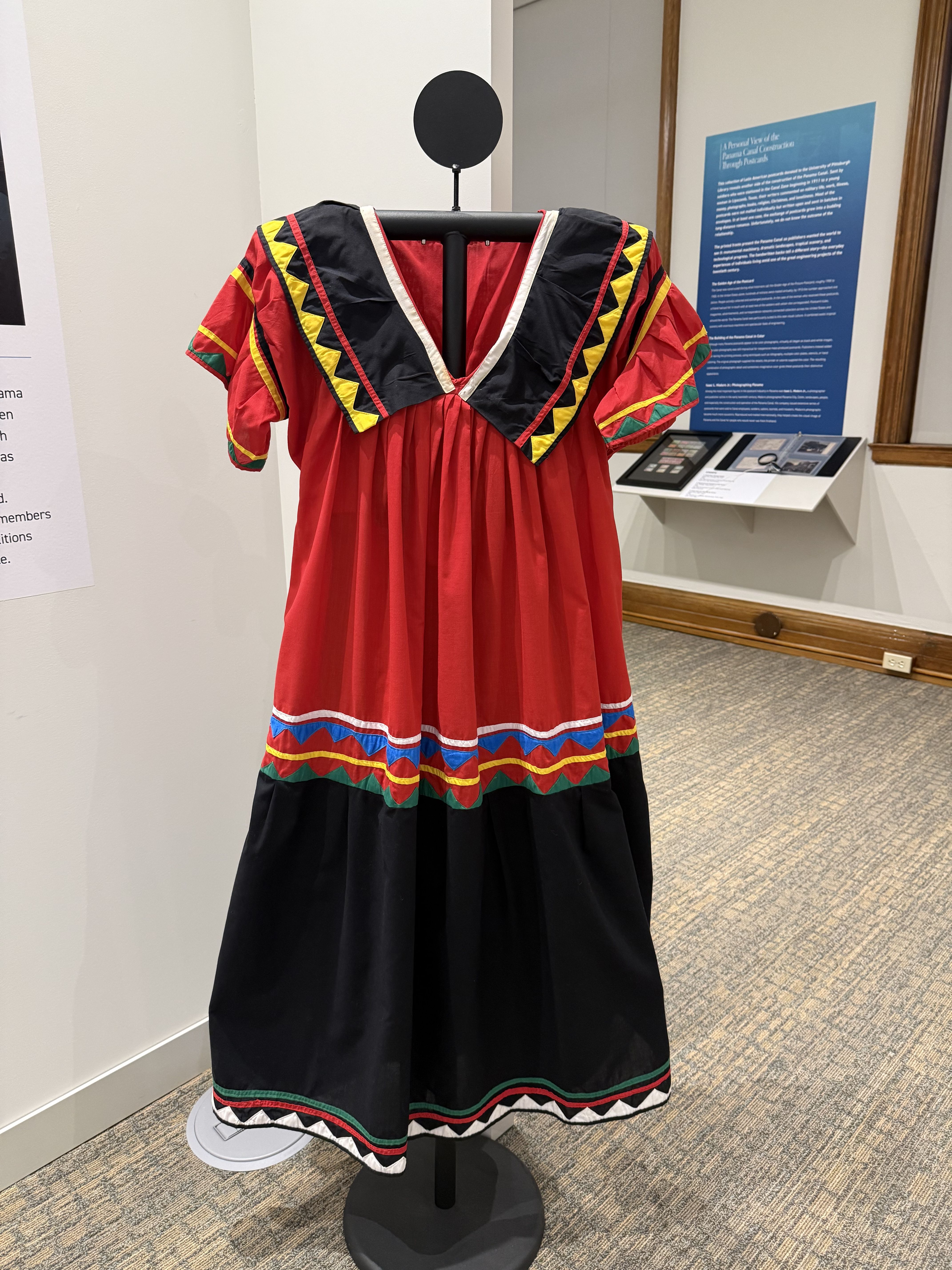
Nagua (Women’s Dress)
Unknown Ngäbe (Guaymí) artist
Western Panama
Late 20th–early 21st century
Commercial cloth, synthetic ribbon trim, machine sewing
LACC Collection
Dresses like these are one of the most recognizable forms of Indigenous dress of the Ngäbe-Buglé in Panama and remain widely worn today, especially in the provinces of Chiriquí, Bocas del Toro, and Veraguas. Variations of the nagua continue to be worn today as markers of cultural identity, community affiliation, and Indigenous continuity in Panama.