


Early Peoples
Archaeological evidence from long before the arrival of Europeans shows that the Isthmus of Panama was home to diverse Indigenous societies whose histories stretch back more than 11,000 years. The earliest inhabitants were highly mobile hunter-gatherers who adapted to the region’s varied environments. Between 5000 and 3000 BCE, communities began cultivating crops such as maize, manioc, and cacao, gradually establishing more permanent settlements.
By 2500 BCE, people were producing pottery alongside finely crafted stone tools, and agriculture became an increasingly important part of daily life. Over time, distinct regional cultures emerged across the isthmus. These societies developed extensive trade and exchange networks that connected communities in present-day Central America with those of northern South America, making Panama an important crossroads of peoples, goods, and ideas long before European contact.
The archaeological site of Monagrillo, on Panama’s Azuero Peninsula, provides some of the earliest evidence of pottery production and maize cultivation in Central America. Radiocarbon dating indicates that the site was occupied between approximately 2500 BCE and 1200 BCE, making it one of the region’s most significant early village settlements. The ceramics recovered at Monagrillo rank among the oldest known in the Americas and reflect the emergence of increasingly settled communities supported by agriculture.
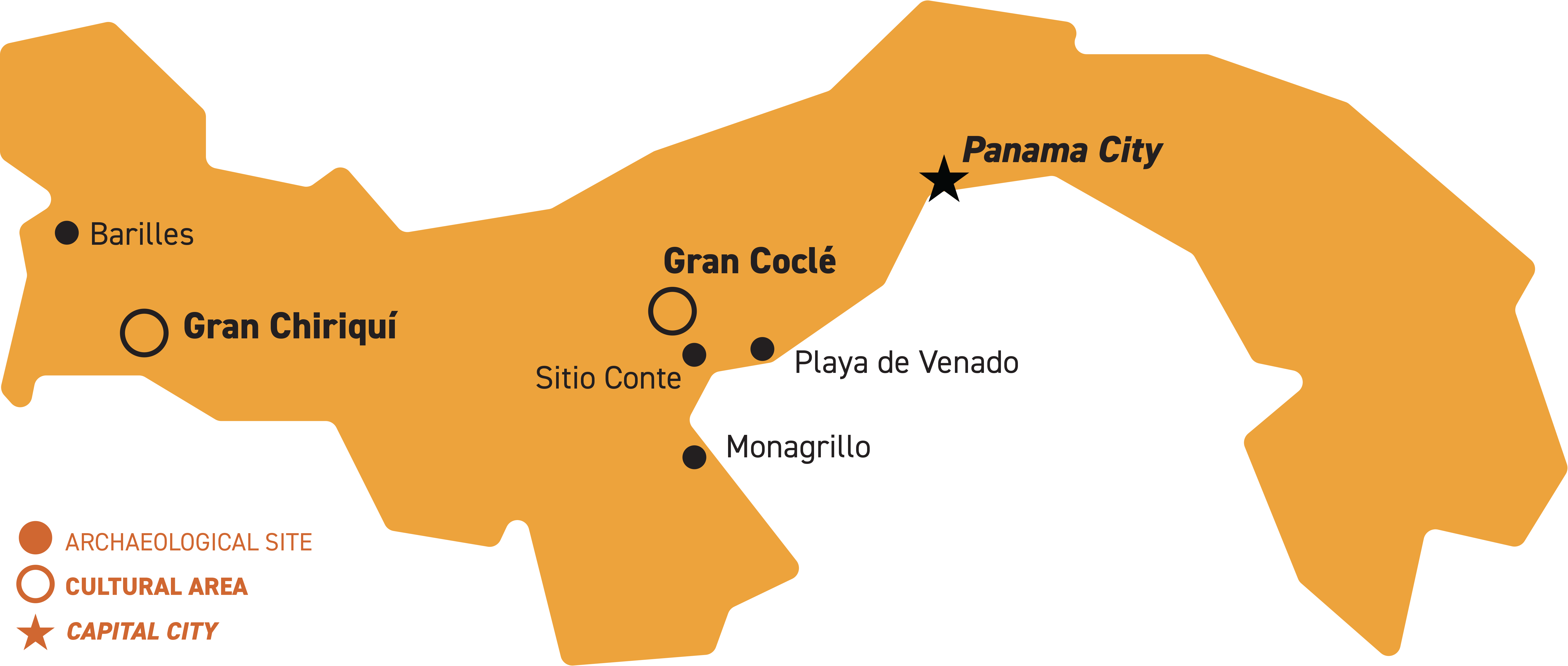
Panama: Archaeological Sites and Culture Areas Mentioned in the Text.
Barriles is one of Panama’s most important archaeological sites. Located in the western highlands at an elevation of nearly 4,000 feet (1,200 meters), it is believed to have served as a ceremonial center surrounded by a permanent settlement of approximately 500 to 1,000 inhabitants. Archaeological evidence indicates that the site flourished between 300 and 900 CE. Barriles is particularly renowned for its carved stone sculptures, which provide valuable insights into the social, political, and religious life of ancient communities in western Panama.
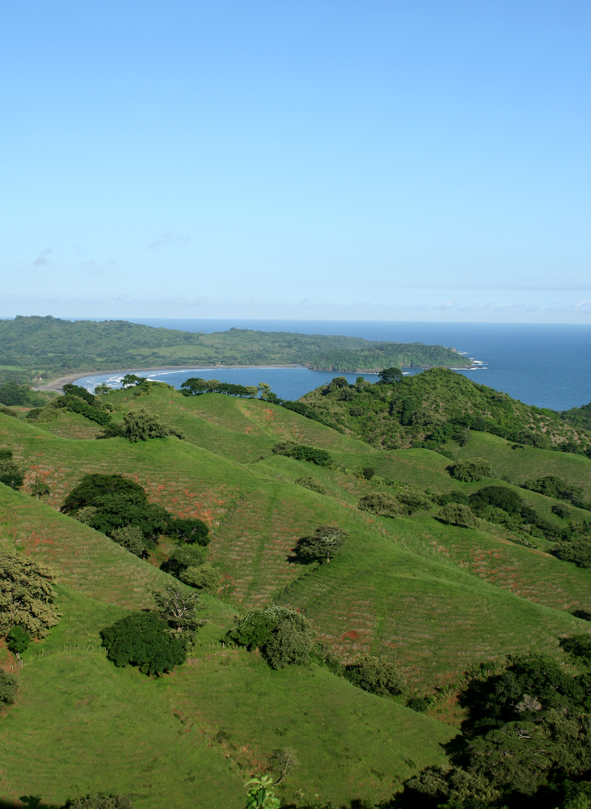
Playa Venao on the Azuero Peninsula. Photo: Pedasí consultant / Wikimedia Commons, public domain.
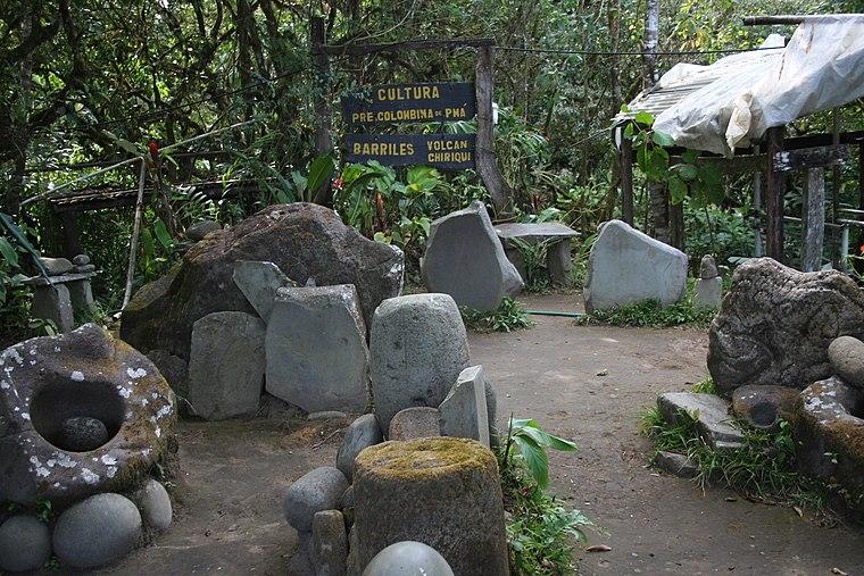
The Barriles site (300-900 CE) is named for the stone “barrels” found there. Photo: Wikimedia, CC BY-SA 3.0
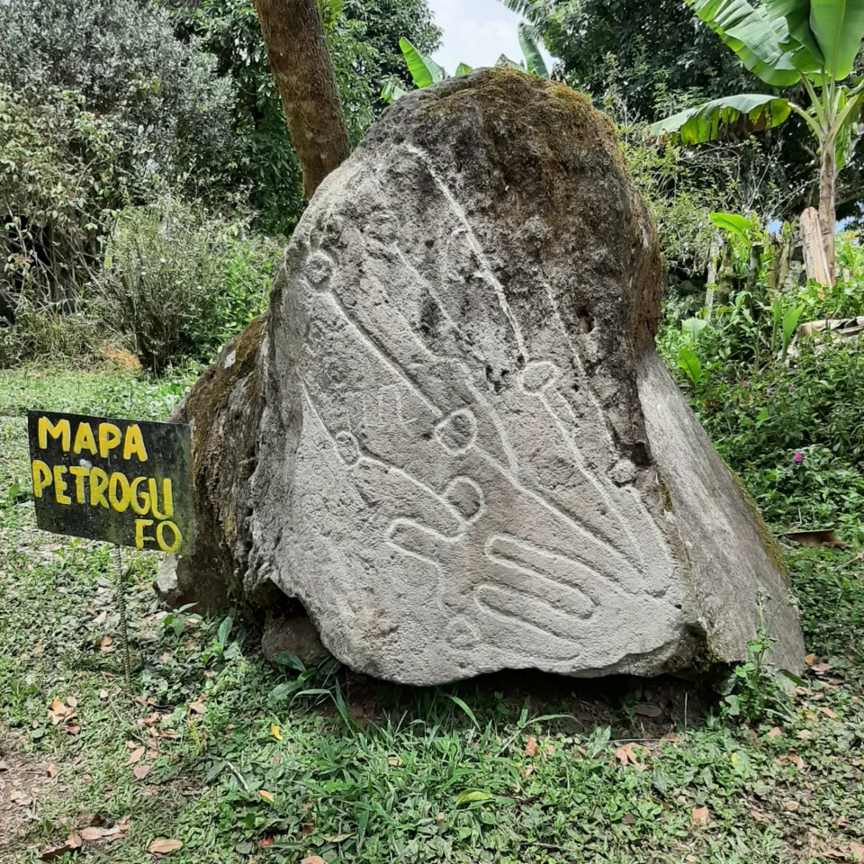
Petroglyph found near Sitio Barriles, Chiriqui Province, Panama. Photo: Trini1988
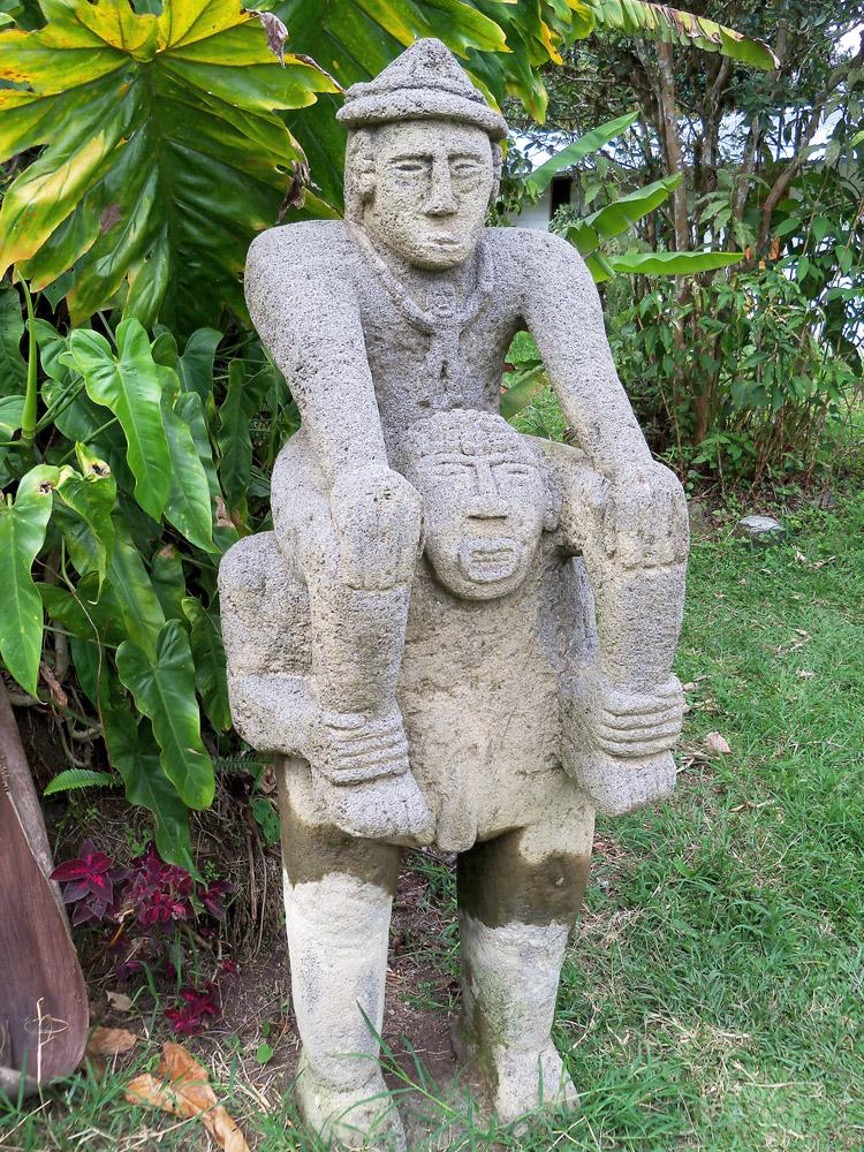
A replica of one of the stone statues found at Barriles (300-900 CE). Photo: Kris Cunningham
Pre-Columbian Art
Between 500 and 1500 CE, major cultural traditions such as Gran Coclé and Gran Chiriquí flourished across what is now Panama. These societies produced extraordinary works of art, including finely crafted gold ornaments, vibrant polychrome ceramics, carved stone sculptures, and elaborate burial offerings. Archaeological discoveries reveal complex social hierarchies, extensive trade networks, and rich religious traditions. Situated at the narrow land bridge connecting North and South America, Panama served as an important center of cultural exchange, where people, goods, and ideas moved across the continent long before the arrival of Europeans.
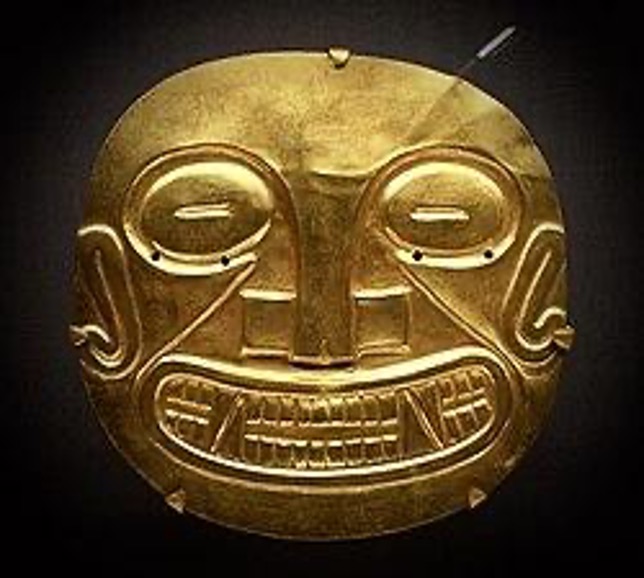
Gold plaque excavated from Sitio Conte, dated to about 700 CE. Peabody Museum, Harvard University.
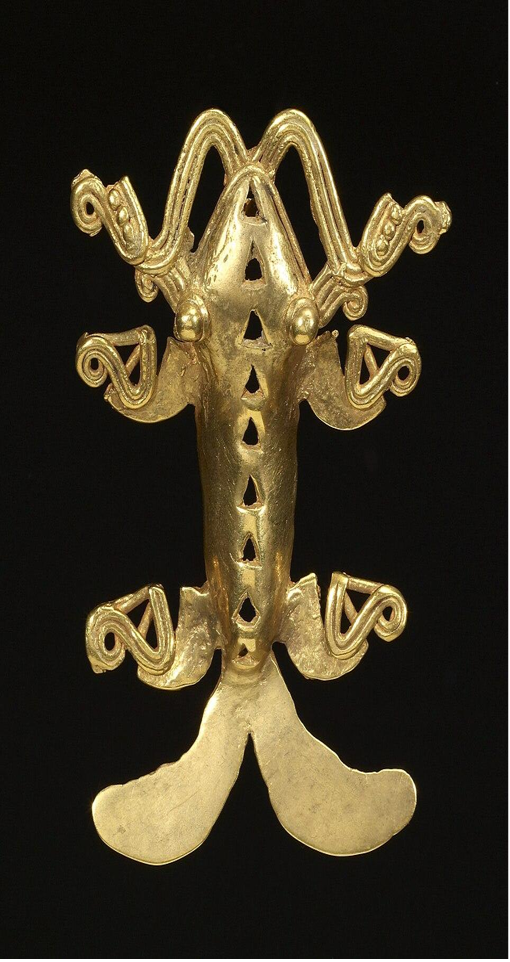
Gold Pendant from the Gran Chiriqui (800-1500 CE). Photo: Walters57301 Walters Art Museum
The stylized motif that combines characteristics of a frog, an iguana, a crocodile, and a shark is seen frequently in pre-Conquest Panamanian art.
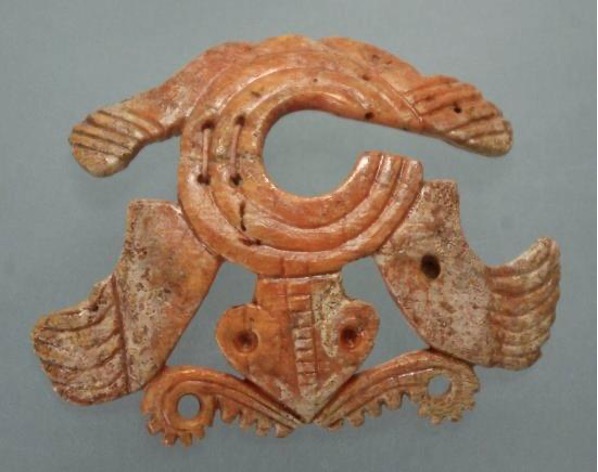
Turtle pendant made of shell, Playa de Venado, 500-1300 CE. Photo: TomR (Thomas Ruedas), Dumbarton Oaks Museum
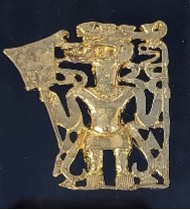
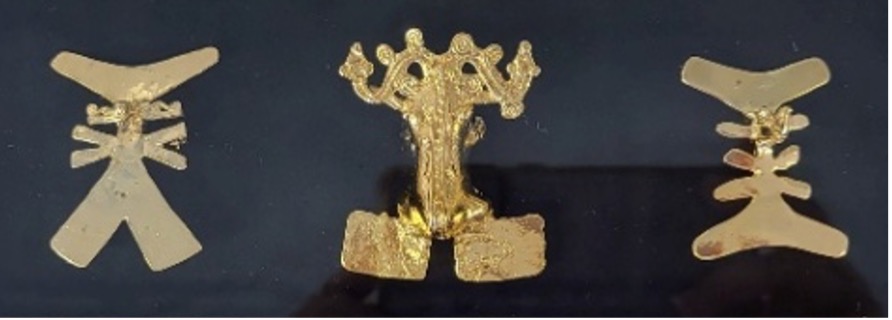
4 Gold Replica Pins. Donation from Barbara Ellen Seni
The Ceramic Art of Ancient Panama
Long before Europeans arrived, the indigenous peoples of Panama created some of the most visually striking pottery in the ancient Americas. The ceramics displayed here come primarily from Gran Coclé in central Panama where potters developed distinctive traditions such as the Conte and Macaracas styles.
Finely decorated pottery served more than practical purposes. Elaborate vessels placed in burials suggest that ceramics could communicate identity, status, belief in, and relationships with the supernatural world.
These vessels preserve part of a visual language created by the indigenous peoples of Panama more than a thousand years ago – a language whose full meaning may be lost, but whose beauty and power remain immediately visible.
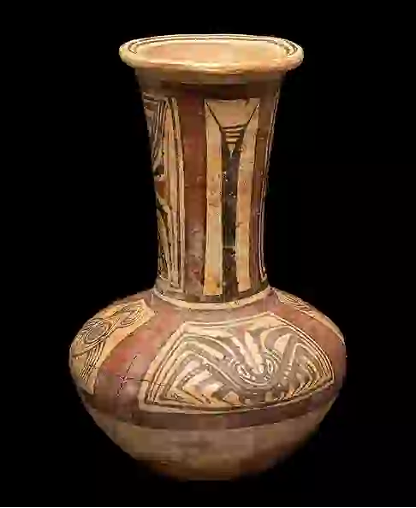
Large Water Jug
400–800 CE
Greater Coclé
Ceramic with polychrome decoration
Loan from Robert Gaston
This large vessel is decorated with bold geometric and animal-like designs characteristic of the polychrome pottery of ancient Gran Coclé.
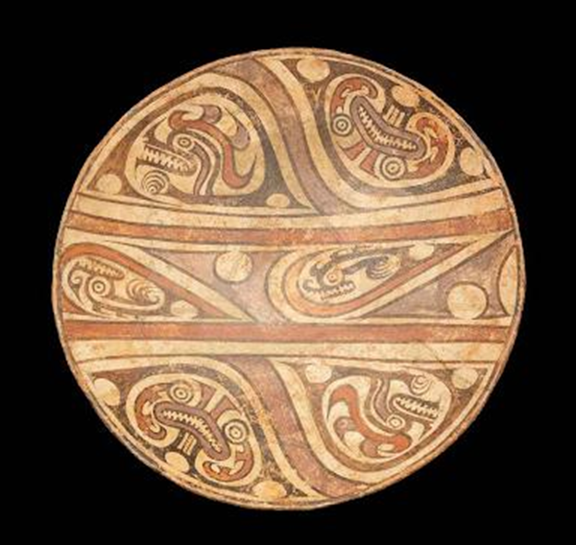
Pedestal Bowl
900–1100 CE
Greater Coclé (Macaracas style), Central Panama, probably Río Parita region
Ceramic with polychrome decoration
Loan from Robert Gaston
The artists transformed highly stylized animals or supernatural figures into complex interlocking designs. Pedestal vessels like this one were probably prestige or ceremonial objects and are frequently found in elite burials.
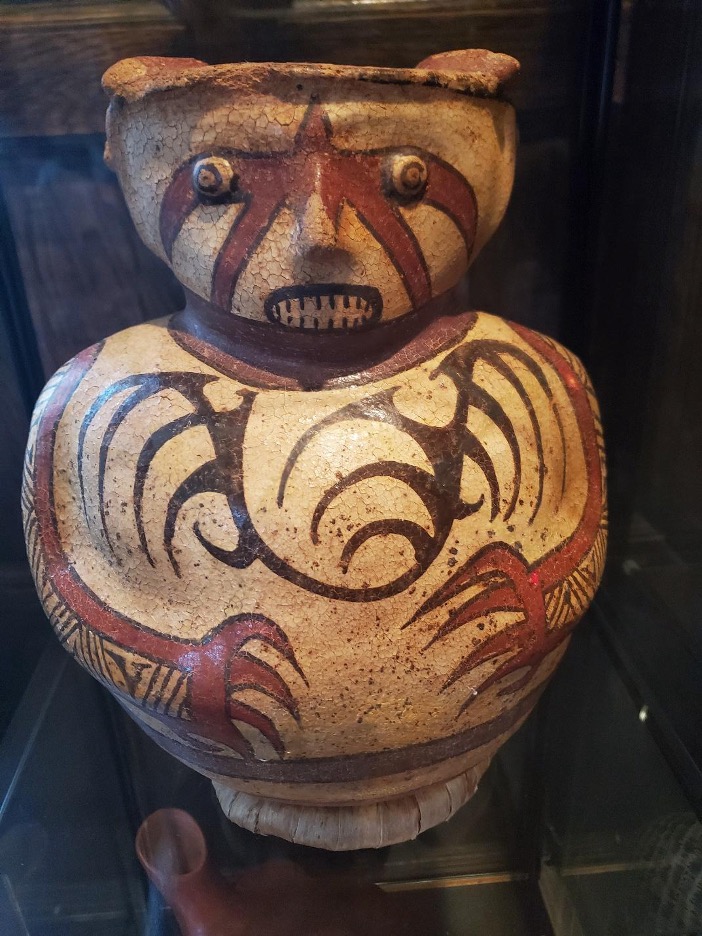
Anthropomorphic Effigy Figure
700–900 CE
Greater Coclé (Conte style)
Ceramic with polychrome decoration
Loan from Claire Keyes and Joel Aaronson
This vessel portrays a human figure with elaborate facial and body decoration. The striking patterns across the face may represent ceremonial face painting or tattooing associated with identity, status, or social role. The figure's body is covered with highly stylized animal or supernatural imagery.
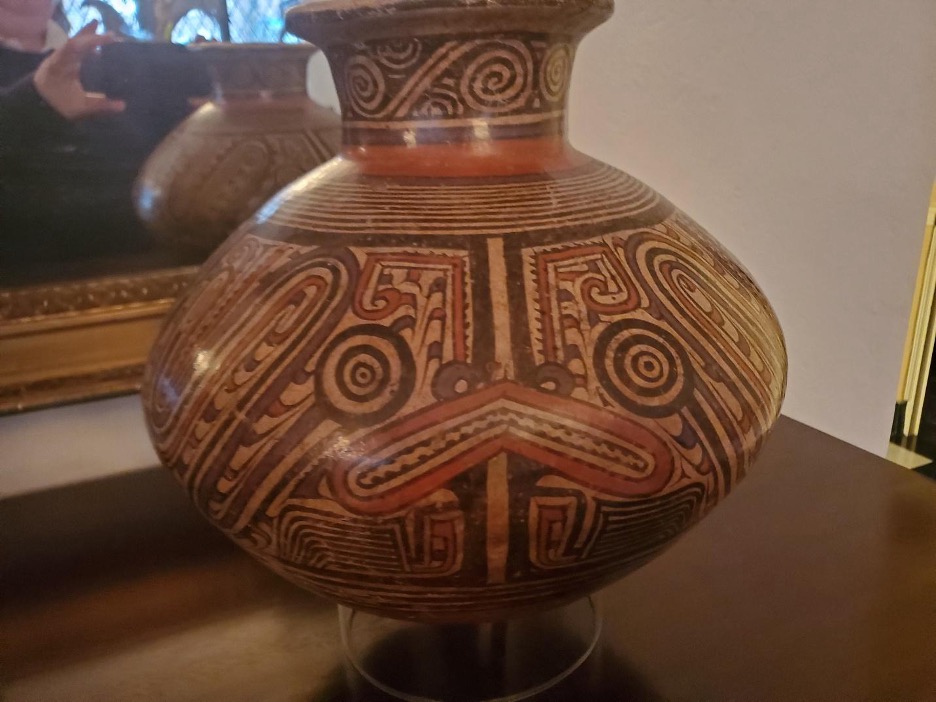
Macaracas Style Jar
900–1100 CE
Greater Coclé (Macaracas style)
Ceramic with polychrome slip decoration
Loan from Claire Keyes and Joel Aaronson
The intricate design on this jar incorporates a highly stylized saurian or crocodilian supernatural being.
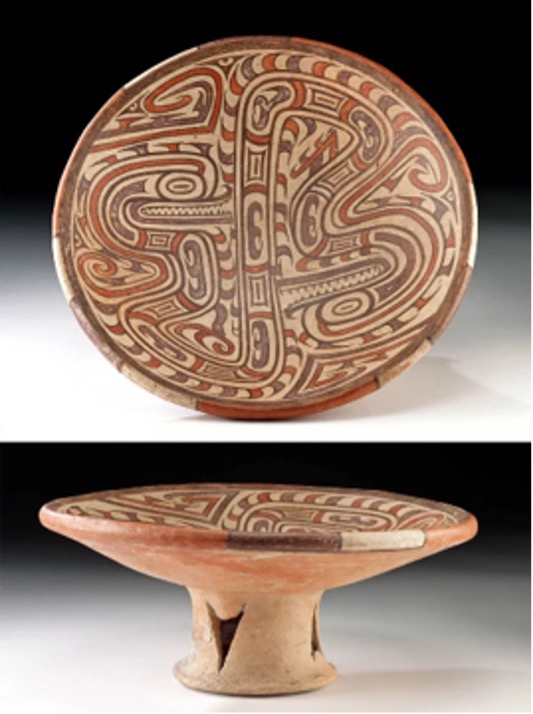
Pedestal Bowl
800–1100 CE
Greater Coclé (Macaracas style)
Ceramic with polychrome decoration
Loan from Robert Gaston
The bowl is decorated with highly stylized animal forms characteristic of Macaracas pottery. Ancient Panamanian artists transformed creatures from the natural world into intricate, interlocking designs that can appear almost abstract.
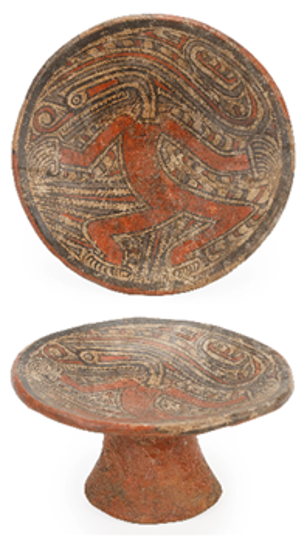
Pedestal Dish
800–1200 CE
Greater Coclé (Macaracas style)
Ceramic with polychrome decoration
Loan from Robert Gaston
This pedestal dish features a supernatural creature blending human and crocodilian traits. Such composite beings are characteristic of ancient Greater Coclé art and may have expressed ideas about transformation, supernatural power, and elite authority.
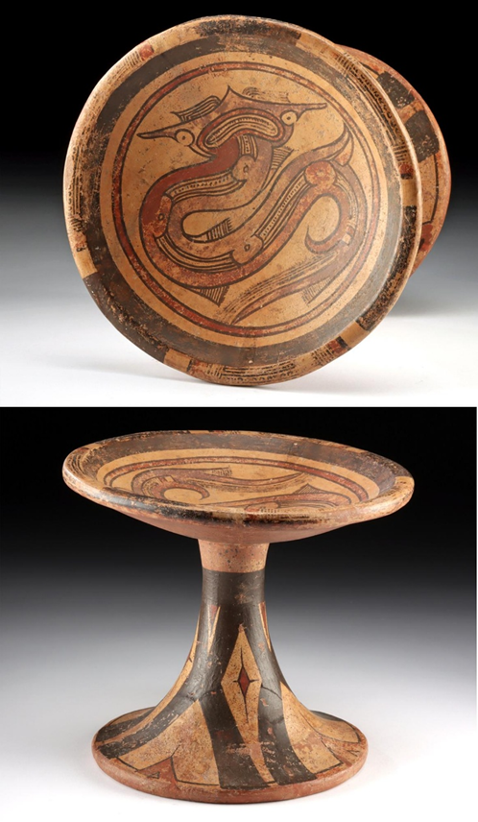
Pedestal Dish
800–1200 CE
Greater Coclé (Macaracas style)
Ceramic with polychrome decoration
Loan from Robert Gaston
This pedestal dish depicts a humanlike figure apparently transforming into a crocodilian supernatural being. Such images have been interpreted as shamans entering the spirit world, reflecting the importance of transformation and communication with supernatural forces in ancient Gran Coclé belief.
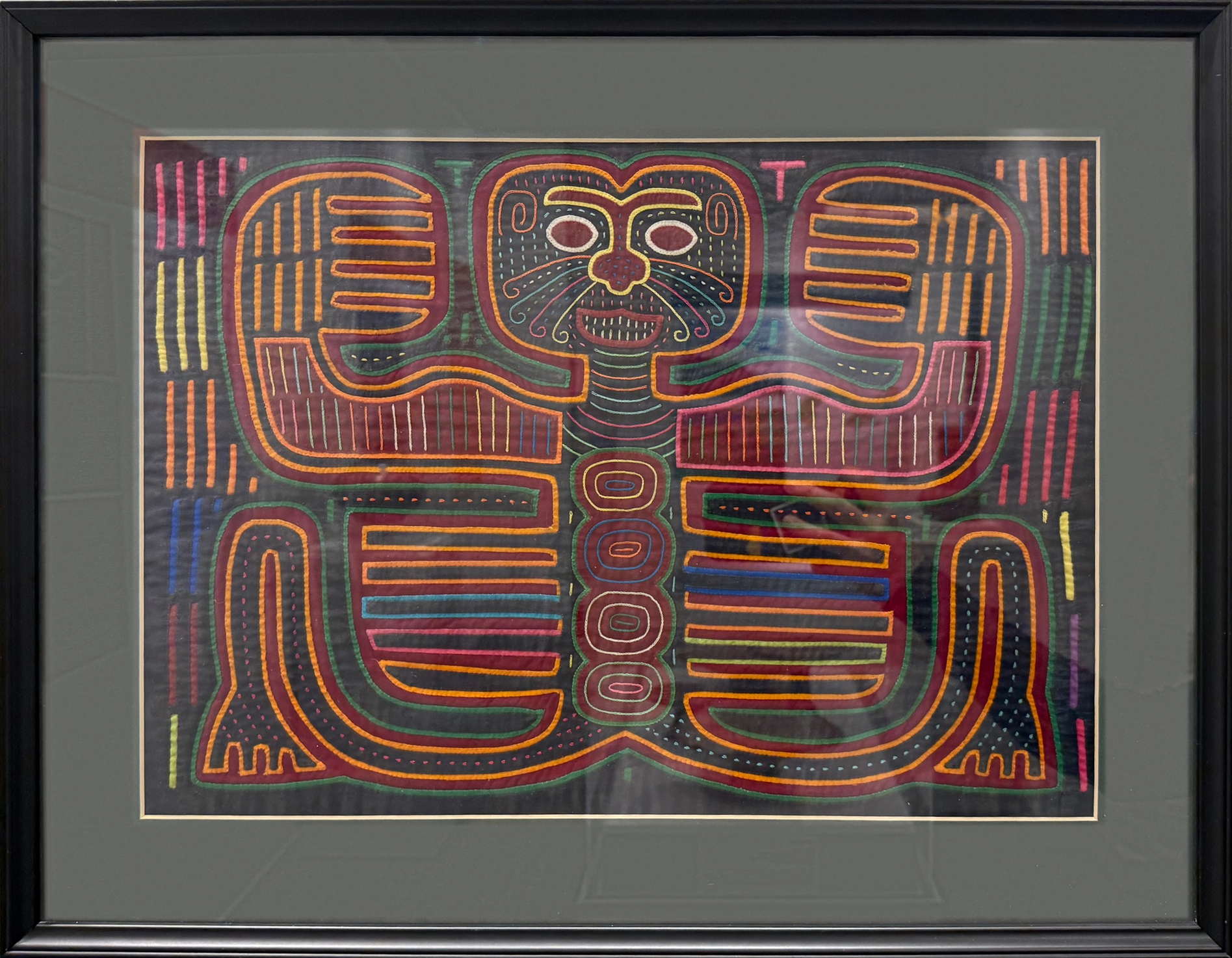
Mola Panel with Anthropomorphic Figure
Guna Yala
Mid- to late 20th century
San Blas Islands
Cotton with appliqué and embroidery
Purchased from William Siegal Gallery Santa Fe, New Mexico
Loan from Claire Keyes and Joel Aaronson
Guna women are renowned for creating molas, intricately sewn textile panels traditionally incorporated into the front and back of women's blouses. This panel depicts a large symmetrical humanlike figure.
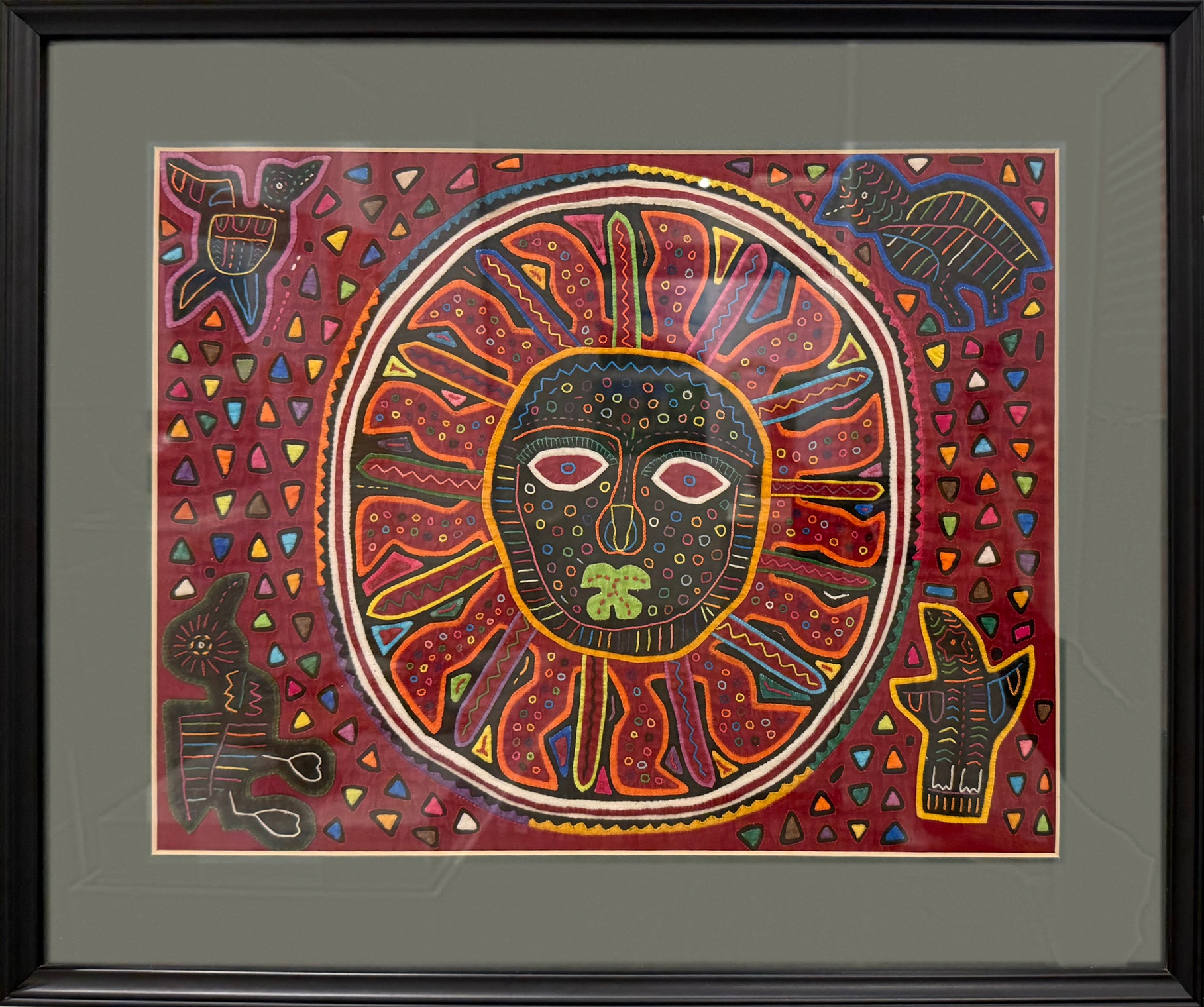
Mola Panel with Sun and Animals
Guna Yala
Mid- to late 20th century
San Blas Islands
Cotton with appliqué and embroidery
Purchased from William Siegal Gallery Santa Fe, New Mexico
Loan from Claire Keyes and Joel Aaronson
On this mola, the central sun-like face is surrounded by radiating forms and four highly stylized animals. Mola imagery ranges from geometric patterns to animals, plants, everyday objects, and imaginative or supernatural beings.
Although the dense forests, heavy rainfall, and rugged terrain of the Darién make archaeological research challenging, evidence shows that the region has been inhabited for at least 7,000–9,000 years. Early communities relied on hunting, fishing, gathering, and small-scale agriculture, adapting to one of the most biodiverse environments in the Americas. Archaeological discoveries, including ceramics and gold ornaments, document continuous occupation from approximately 500 BCE to 1500 CE and reveal strong cultural connections with societies in present-day central Panama and northwestern Colombia. Most known sites are located along rivers and elevated terraces, reflecting settlement patterns that continue in the region today. Dugout canoes likely served as the primary means of transportation, linking Darién communities to broader networks of trade, communication, and cultural exchange.