

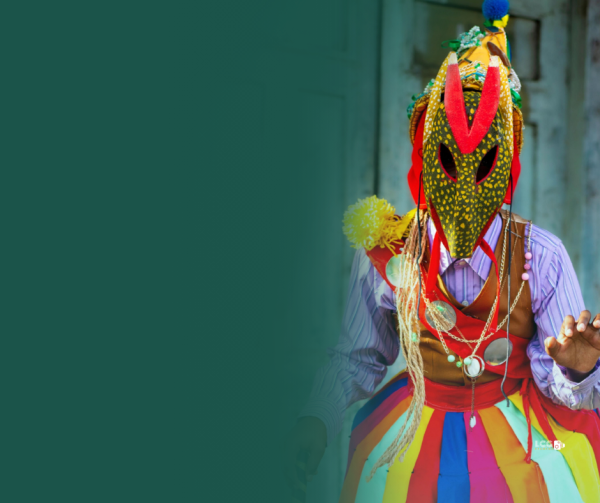

Desperation Highway – Crossing the Darién
More than a million people from over 100 countries have crossed the treacherous terrain of the Darién Gap in Panamá since 2021. Many seek safety, opportunity, and a new life in the United States. Through jungle, rivers, mountains, mudslides, and the constant threat of violence and exploitation, migrants-- including a growing number of families with children—undertake an uncertain journey with little more than the possessions they can carry.
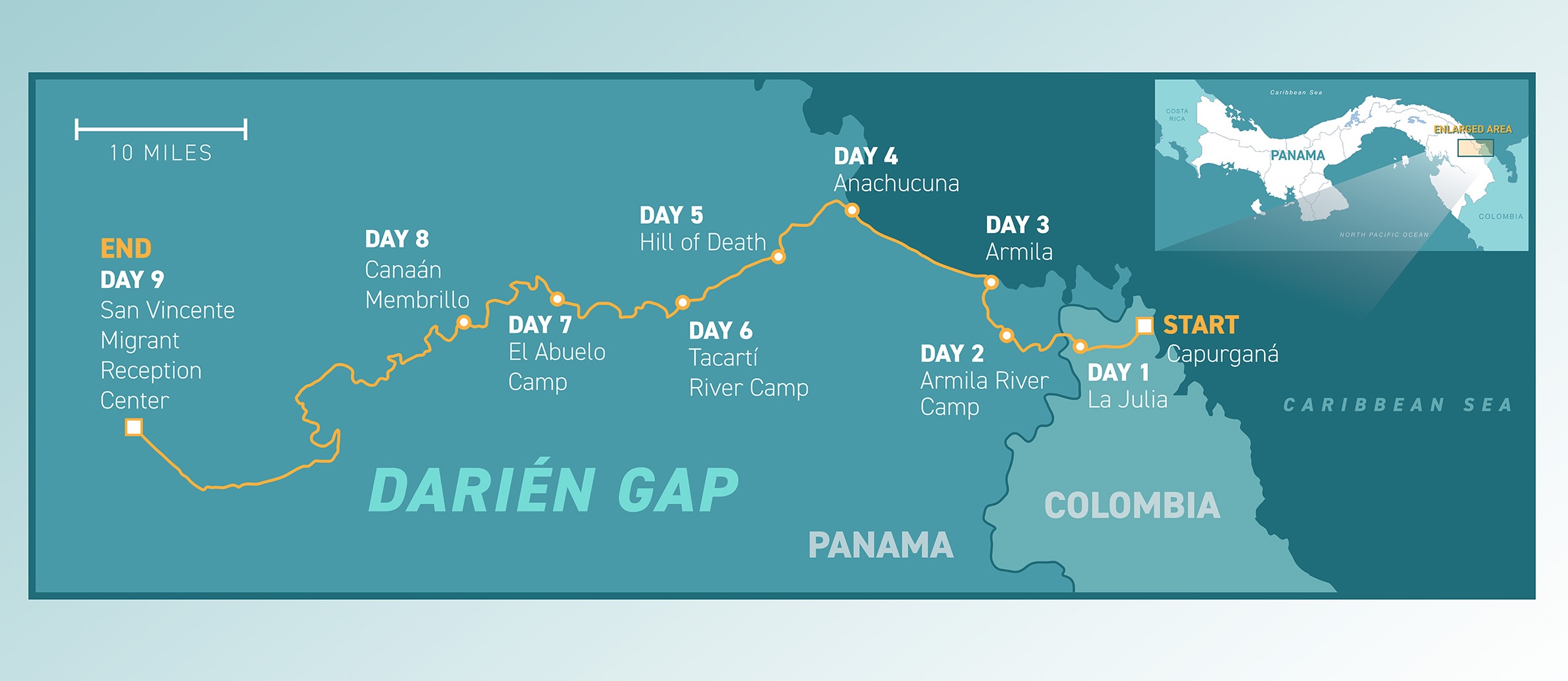
The global migration crisis, driven by political instability, economic hardship, climate change, and conflict, converges dramatically in the Darién Gap—one of the world’s most dangerous migration routes, stretching across 100-kilometers of dense, roadless jungle between Colombia and Panama.
Federico Ríos Escobar, is a recognized freelance photographer, and a frequent contributor to The New York Times. Throughout his career he has focused on themes such as armed conflict, migrants, the environment and its relationship with society. His photographs have been published in international media such as National Geographic, Stern, Geo, and Times Magazine. His work has been recognized with several international awards. Seen here, are photos from Federico Ríos’ compelling documentation of the extraordinary passage through the Darién Gap, revealing the universal human stories of survival, loss, hope, and the search for a better future.
TIMELINE
- 2010 A major earthquake in Haiti killed approximately 200,000 people and displaces many more. Many emigrated to Brazil, Chile, and other places where they faced discrimination. In subsequent years, another major earthquake, hurricanes and tropical storms, gang violence, and poverty led many more to leave.
- 2013 Nicolás Maduro became President of Venezuela . resulting in economic chaos. Nearly 7.9 million Venezuelans—roughly one-quarter of the country's population—left Venezuela,. creating. one of the world's largest displacement crises.
- 2018-2020 Approximately 39,000 people crossed from Colombia through the Darién to Panama and points north, with the hope of reaching the United States.
- 2020 The COVID pandemic led countries, including Panama, to close their borders, effectively halting migratory flows. By the following year, the borders reopened, leading more than 130,000 people to use the Darién as a migration route.
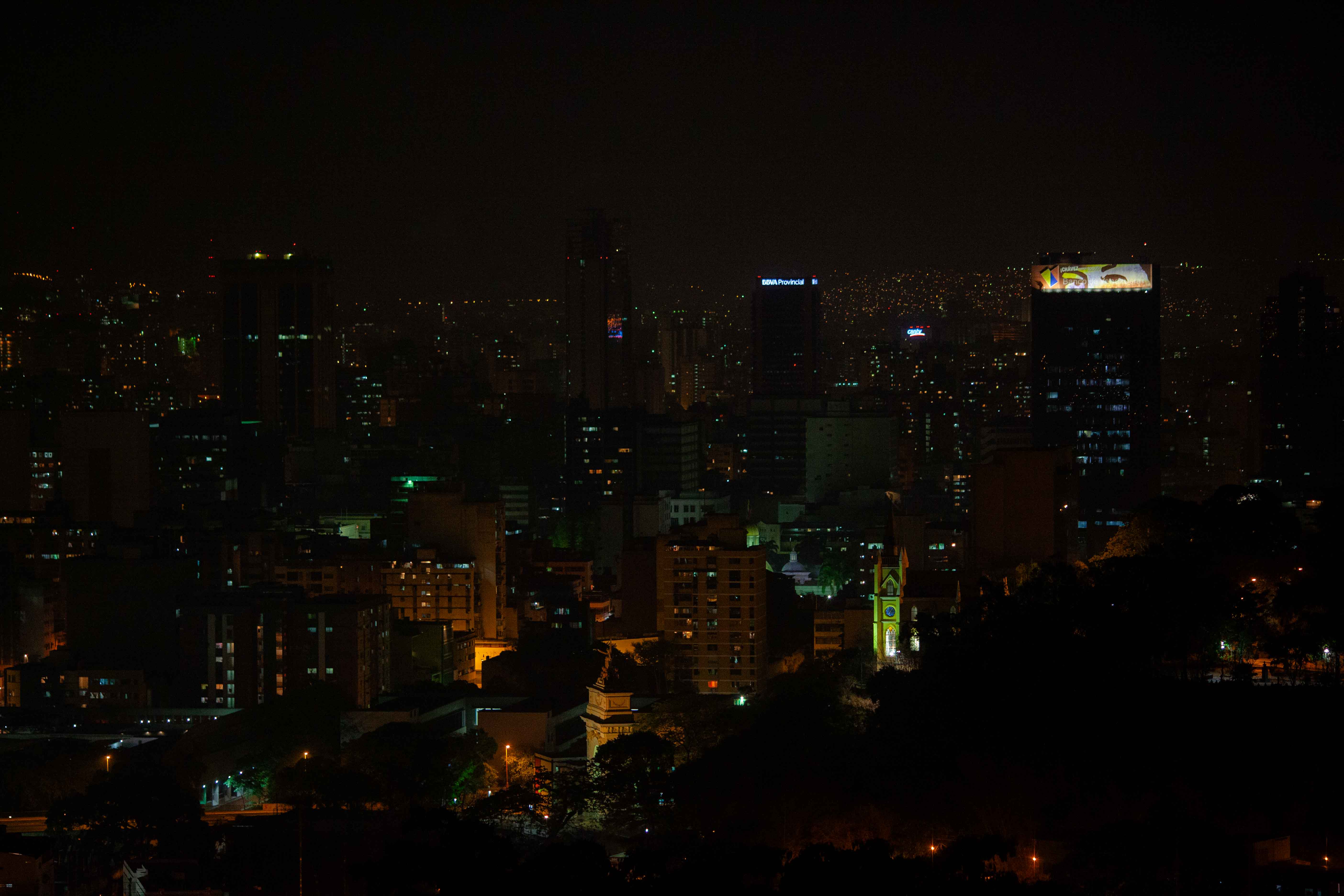
Nicolás Maduro’s regime resulted in a collapse of the economy, hyper-inflation, political repression, and a marked increase in poverty that led many people to flee the country. Public services collapsed with repeated electricity blackouts lasting for days on end as seen in this photo of Caracas.
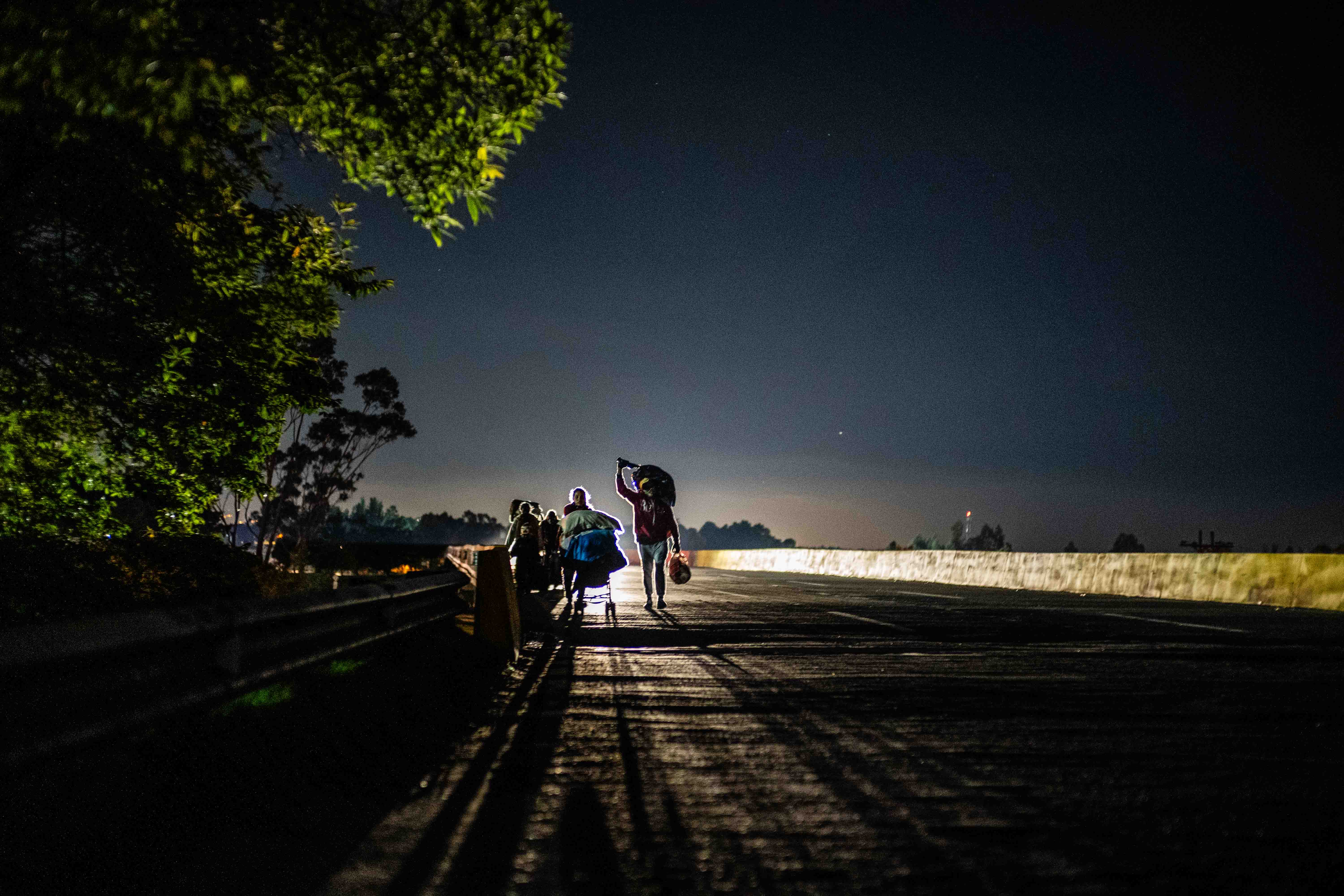
Millions of Venezuelans emigrated to Colombia where they held precarious jobs. Many were forced to return to Venezuela due to the COVID pandemic. Among them were Jessika and her seven-year-old son Sebastián, who made the grueling journey to re-enter their country.
Migrants arrived by bus to Necoclí, Colombia from across South America and gathered in the town to obtain food, supplies, lodging, and passage north. They were not yet aware of the heroic efforts that would be needed when they traveled through the Darién.
In Necoclí migrants purchased passage in small boats to cross the Gulf of Urabá, toward Capurganá or Acandí, the gateways to the Darién jungle on Colombia's Chocó coast.
Chinese, Venezuelan, Ecuadorian, and Afghan migrants board a boat to Capurganá. For many Afghans, it was the first time they had seen the sea and that was a terrifying part of their journey. Dozens of migrants have died in wrecks on the ocean, something that is rarely talked about.
Eighteen-year-old Yineska Colina from Venezuela made the journey with her two daughters. The youngest had not yet learned to walk. They passed through Capurganá in Colombia.
TIMELINE
- 2021 The Taliban regained control of Afghanistan leading to an exodus of people fearing persecution. Some were able to get to Brazil and, along with Chinese, Indians, and other Asians, joined the flow of people attempting to reach the United States via the Darién.
- 2021-2024 Federico Rios and Julie Turkewitz begin traveling with the migrants using the Darién jungle as a route to reach locations where they can continue their journey north toward the United States. During those four years, . over 1,200,000 people from more than 100 nationalities made the trip through the Darién, according to Panama's National Migration Service.
At the heart of dawn, thousands of migrants wade across the Rio Muerto (Dead River) entering the Darién jungle. At the front of the group a man in a shirt is the paid guide who leads the way that others must follow.
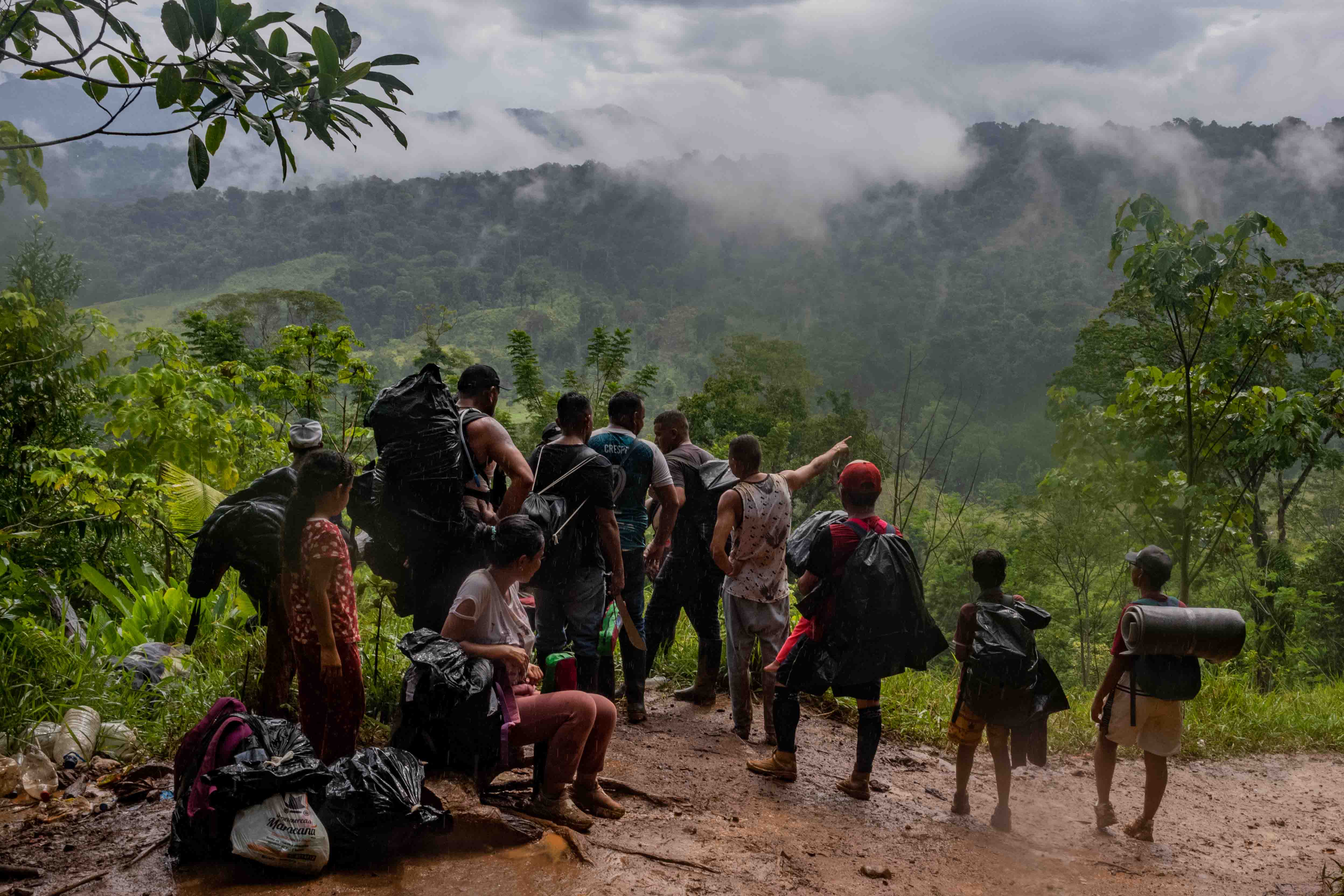
In the middle of the jungle, migrants find drinks, food, and internet access at certain points marked by the groups that controlled the routes. A drink cost five dollars, a meal cost ten, and a small ice cream cost two. Health checkpoints were even established along the route to treat the many injured or sick.
Luis Miguel Arías, who had only been in the jungle for two days, was already so exhausted that he could not speak. His daughter Melissa watched her hero collapse by her side. Luís carried her for much of the journey, accompanied by his wife Desyree and seven-year-old son Luís Breyner.
Yhoana Sierra screams in pain after falling on one of the treacherous slopes. She was pregnant and woke up bleeding the following morning. It is likely that she lost her baby.
Gabriel Ynfante in the red shorts in the middle of the photograph holds on to a rope with one hand on a steep muddy descent while holding the hand of Francheska Lopez with his other hand. She was the daughter of some friends he had met just a few kilometers earlier as they passed through the jungle. A trombonist in his own country, Gabriel sang a popular children’s song called Bartolito to help calm Francheska and others.
.
Sarah Cuauro was only six years old and became separated from her mother Alexandra during their trek through the jungle. Ángel Garcia (42) cared for her for several days while they continued their journey and searched for her mother. Ángel dropped Sarah at a police station in Canaan Membrillo when he made it out of the jungle. Several hours later, her mother arrived at the station and was reunited with her daughter.
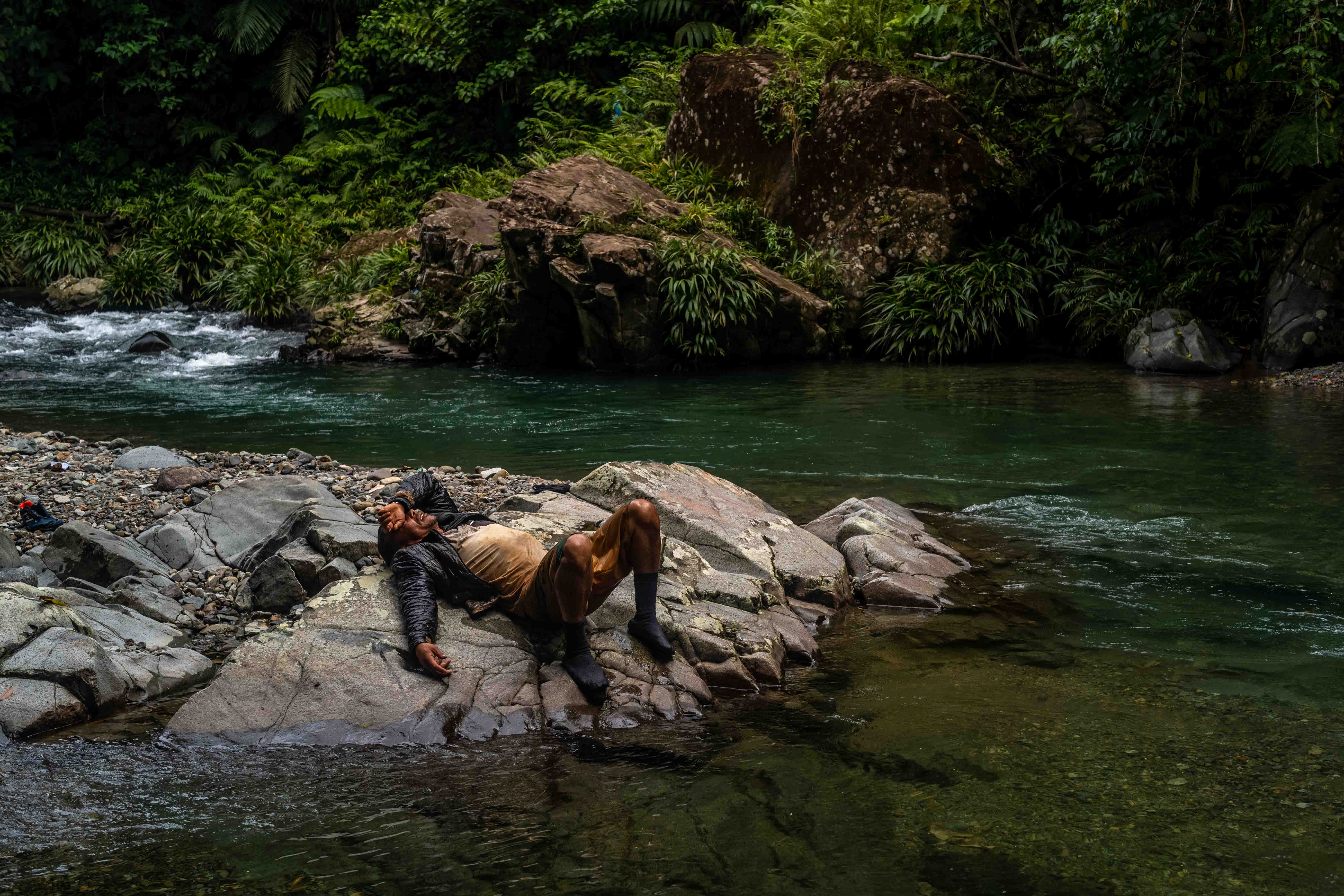
After his wife died of cancer in Venezuela, Hamlet journeyed to Peru with his three young daughters but could only find a job collecting garbage. On returning home one evening, his daughters said they had read about the Darién Gap on social media and convinced him to migrate once more. During the trek Hamlet gave the little food he had to his daughters and here is collapsed unable to continue walking.
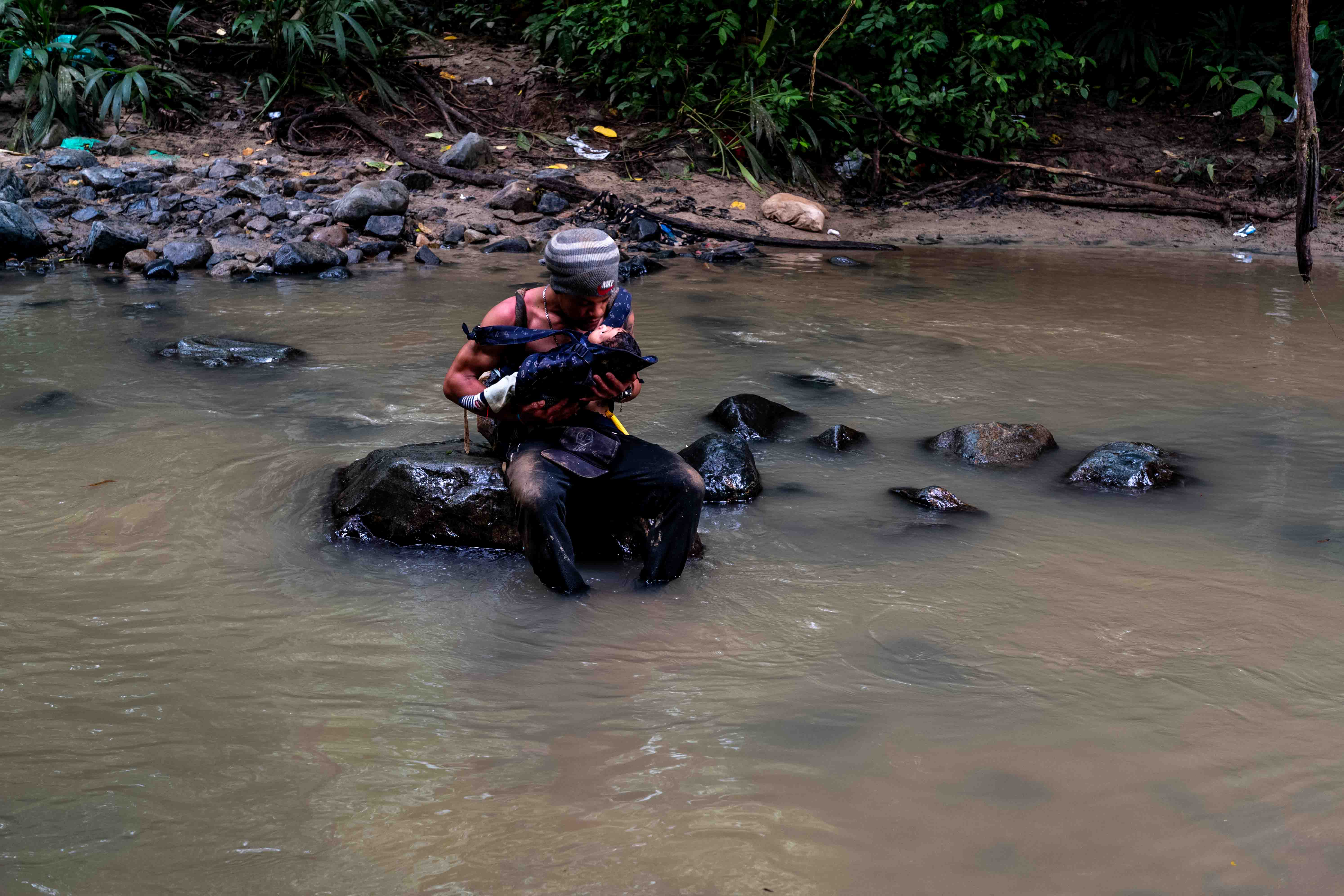
Here a migrant pauses for a brief rest with his infant along the river.
Rivers are one of the greatest dangers for migrants. Sudden surges and whirlpools sweep migrants away. The number of people who lost their lives trying to cross the rivers of the Darién Gap is unknown.
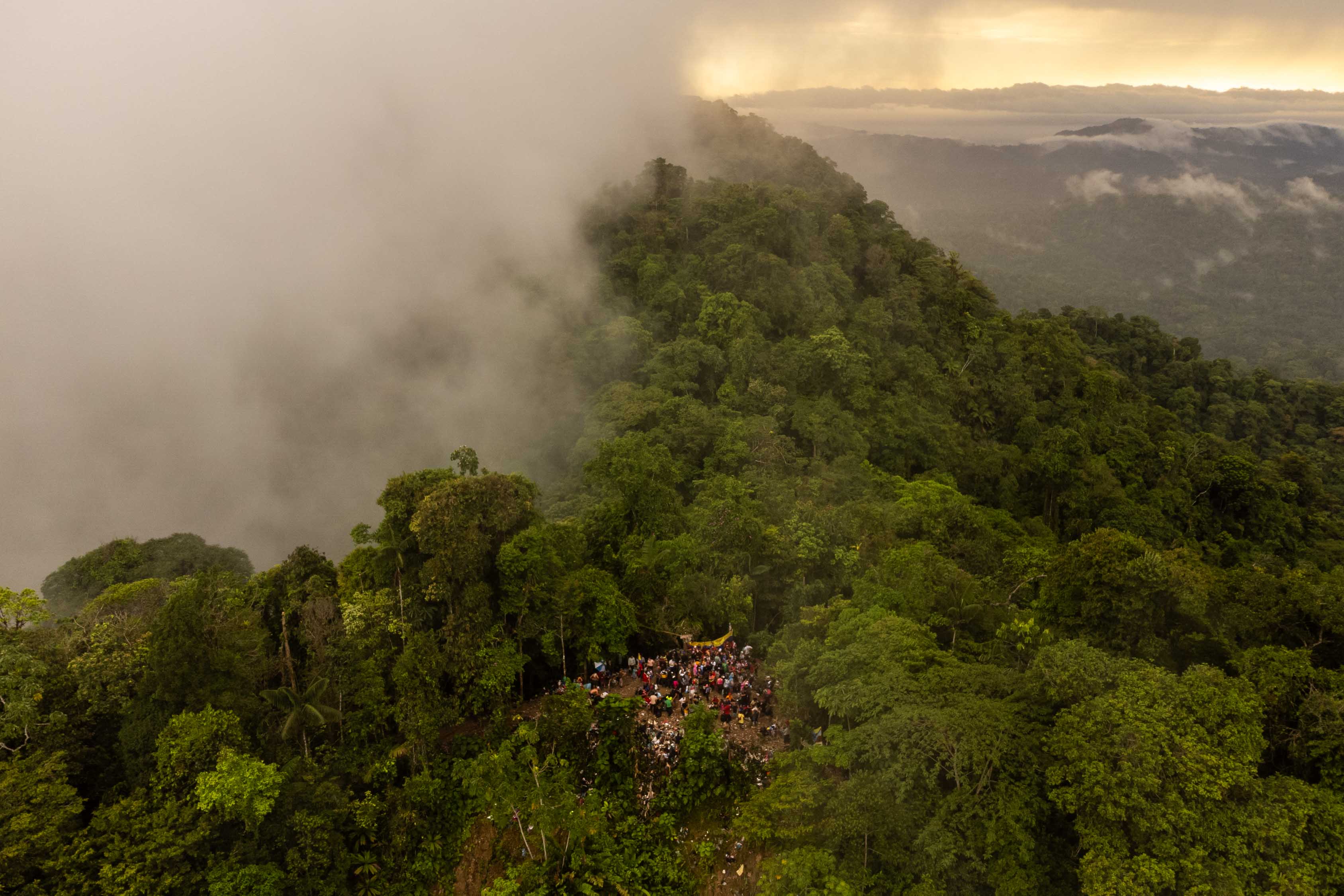
Migrants arrive at a spot called Las Banderas on the border between Colombia and Panama.
Englimar Galindez with her children Sebastian and Juan Colmenares wept with joy when they finally made it out of the jungle. Here they listen to an indigenous leader in El Campamento del Abuelo where food is sold to those emerging from the jungle.
A group of Haitian migrants line up along the riverbank next to a Panama National Border Service office. They were getting ready to board canoes that would take them to Bajo Chiquito.
Making it out of the jungle is not the end of the journey, nor the end of the danger, or the costs of migration. Migrants paid twenty dollars each to indigenous people to board small boats bound for Bajo Chiquito, a journey of four hours. Emberá and Wounaan communities at Bajo Chiquito and Canaán Membrillo became crucial transportation and service centers.
Hundreds of people arrived each day at Bajo Chiquito on canoes. Some days there were more than 3,000. After a night in the village, they continued their journey the next day, once again boarding canoes manned by indigenous people heading to Lajas Blancas. The fare, regulated by the indigenous communities and Panamanian government, was fifteen dollars per person.
Thousands of migrants fell victim to sexual violence while making the journey. Doctors without Borders and other humanitarian organizations denounced the brutality in which victims were raped, robbed, and beaten.
Reaching the United States border, migrants do not receive a hero’s welcome but instead faced yet more barriers before they could reach their goal of a better life. It is impossible to know how many of those who crossed the Darién were successful in settling in the United States.
TIMELINE
- 2024 - In June 2024, the Biden administration imposed substantial new restrictions on asylum at the U.S.-Mexico border. Panama elected President José Raúl Mulino, who took office July 1, 2024 promising to shut down the Darién migration corridor. The number crossing the Darien dropped dramatically.
- 2025 - After President Trump took office in January, his administration sharply restricted access to asylum at the U.S.-Mexico border and greatly increased the likelihood of detention and deportation. The message traveled quickly through migrant networks: crossing the Darién no longer offered the same prospect of eventually entering the United States. The number of crossings dropped to trickle. Only 2,934 crossed the Darién that year.
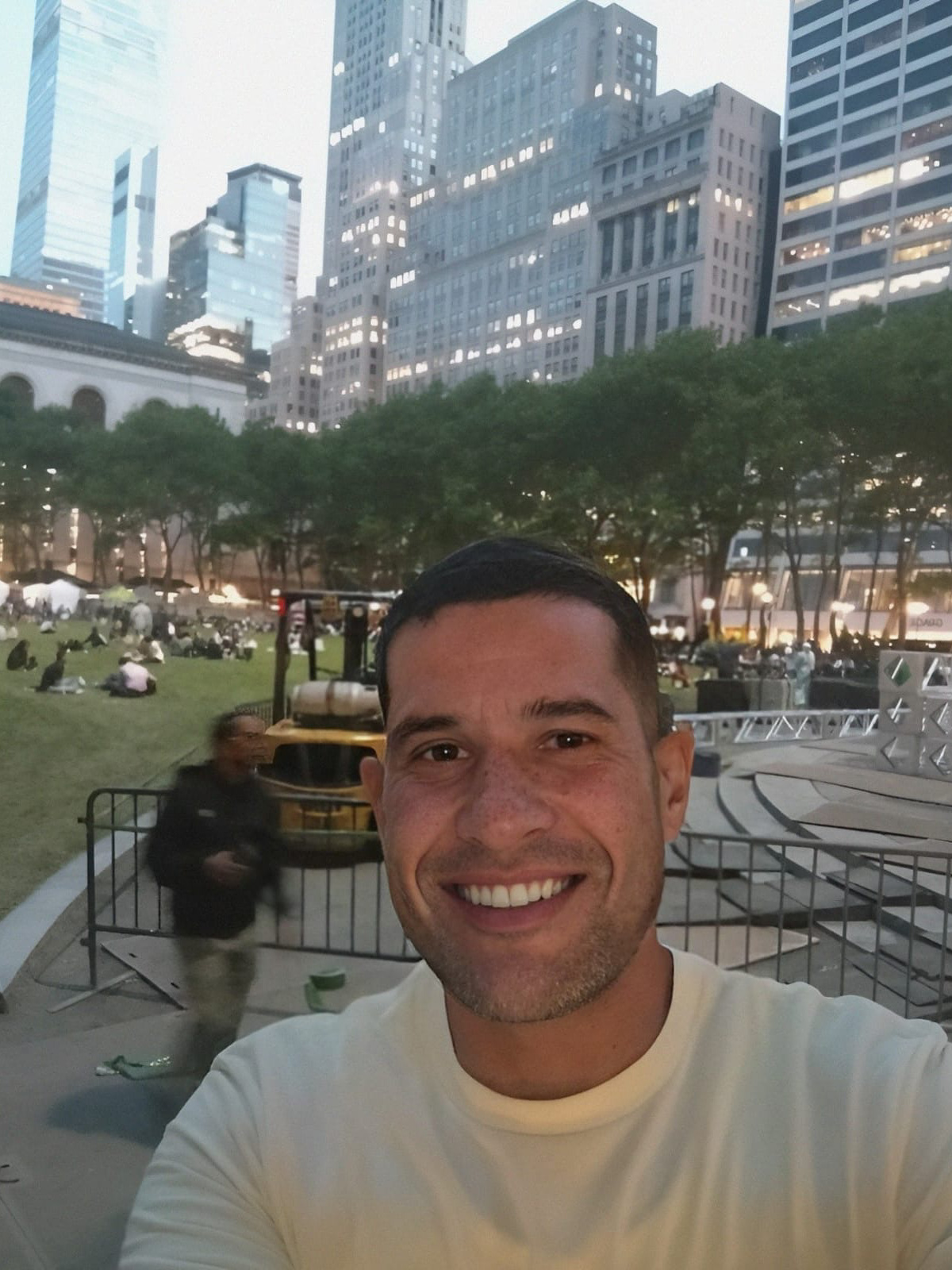
Ángel who looked after and saved Sarah when crossing the Darién Gap now works as a truck driver in Pennsylvania.

Alexandra, her daughter Sarah, and a new sister live in Florida. Alexandra works in a coffee shop and Sarah goes to school.