



Population Loss, Enslavement, Indigenous Resistance
When the Spanish arrived in Panama in the early sixteenth century, the Indigenous population is estimated to have numbered as many as two million people. Within a few generations, however, warfare, forced labor, displacement, and introduced diseases caused a catastrophic decline in the native population. Faced with severe labor shortages, the Spanish increasingly relied on enslaved Africans to support agriculture, mining, construction, and transportation. As a result, Panama became an important center of the transatlantic slave trade, with thousands of African men, women, and children forcibly brought to the isthmus.
Many enslaved Africans worked as muleteers, transporting goods and treasure along the routes linking the Atlantic and Pacific coasts. Their labor was essential to the functioning of the Spanish colonial economy, and Afro-descendant communities became a vital part of Panama’s urban and cultural life. Their descendants continue to play a central role in the nation’s identity today.
The Darién remained one of the strongest centers of Indigenous resistance to Spanish colonization. The ancestors of today’s Emberá and Wounaan peoples used their deep knowledge of the region’s rivers, forests, and rugged terrain to resist Spanish incursions. Indigenous communities attacked settlements, disrupted supply routes, and limited colonial expansion, making Spanish control difficult and costly. As a result, the Spanish largely abandoned efforts to dominate the region. Unlike many other parts of Panama, the Darién never developed extensive colonial towns, plantations, or road networks, allowing Indigenous communities to maintain a greater degree of autonomy throughout the colonial period.
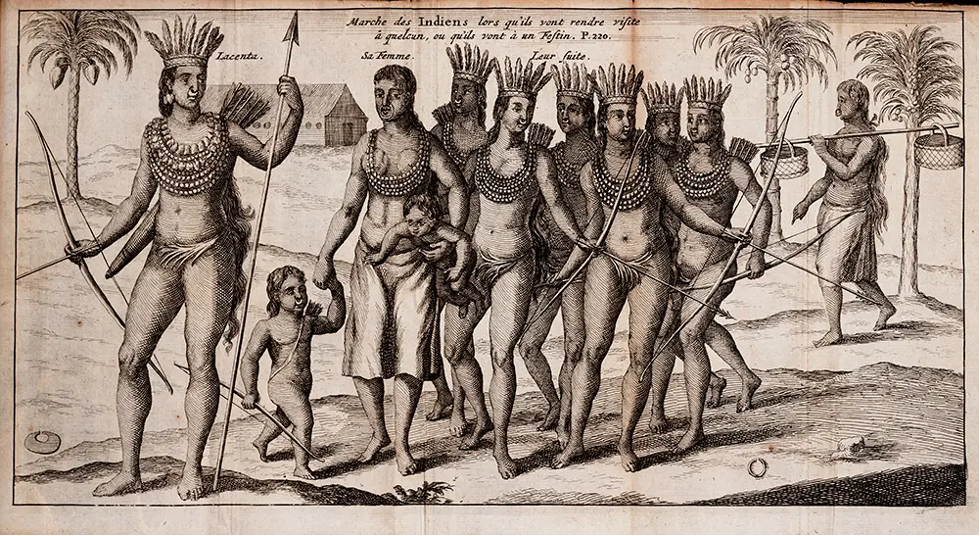
Indigenous people marching to a feast. Image source: Dampier, William. Voyage de Guillaume Dampier aux terres australes, à la Nouvelle Hollande, &c fait en 1699. Amsterdam: Chez Paul Marret ..., 1705, pp. 220-21. Linda Hall Library, History of Science Collection; G420. D23 1705.
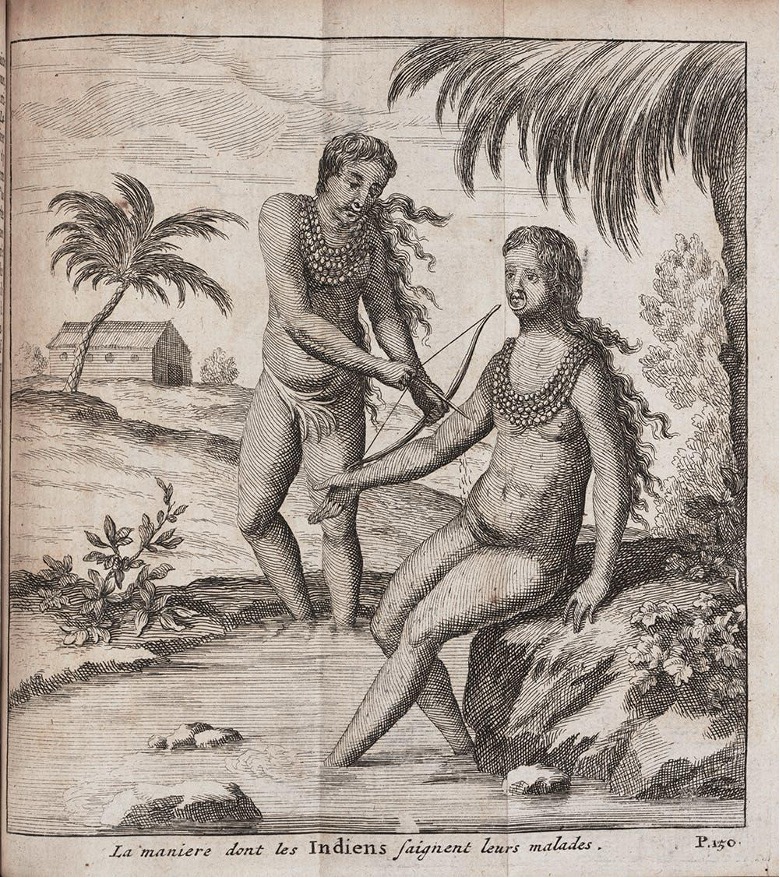
Indigenous people using bloodletting as a form of treatment. Image source: Dampier, William. Voyage de Guillaume Dampier aux terres australes, à la Nouvelle Hollande, &c fait en 1699. Amsterdam: Chez Paul Marret ..., 1705, pp. 150-51. Linda Hall Library, History of Science Collection; G420 .D23 1705
Panama occupied a strategic position within the Spanish Empire, valued less for large-scale settlement than for its role as a transit corridor linking the riches of South America to Europe. This transit economy brought considerable wealth but also made the region a target for rival European powers. During the seventeenth century, pirates and privateers repeatedly attacked Panama’s ports and trade routes to disrupt Spanish commerce and seize treasure. The most famous of these raids occurred in 1671, when the Welsh privateer Henry Morgan led an attack that resulted in the destruction of Panamá Viejo, the original Spanish city on the Pacific coast. In response, the city was rebuilt in 1673 at a nearby, more defensible location. Today, the ruins of Panamá Viejo and the historic district of Casco Antiguo stand as reminders of Panama’s central role in the global trade networks of the colonial era.
The Darien Scheme: Scotland’s Failed Colony in Panama
In 1698, Scotland launched an ambitious effort to establish a colony on the Caribbean coast of the Darién. Organized by the Company of Scotland, the venture sought to create a trading settlement called New Caledonia that would create a trading hub linking the Atlantic and Pacific. Scottish investors committed an extraordinary share of the nation’s wealth to the project, viewing it as a path to prosperity and international influence.
The colony faced overwhelming challenges from the outset. Settlers encountered tropical diseases, food shortages, difficult environmental conditions, and strong resistance from Spanish authorities, who claimed the territory as part of their empire. Isolated and ill-prepared, the colonists suffered devastating losses; more than 80 percent are believed to have died from disease, malnutrition, or conflict.
The financial losses were catastrophic, wiping out a large portion of Scotland’s national wealth. The failure of the Darien Scheme helped push Scotland toward the 1707 Act of Union with England, reshaping world history. Even today, more than 300 years later, there are many in Scotland who argue for separation from the United Kingdom.
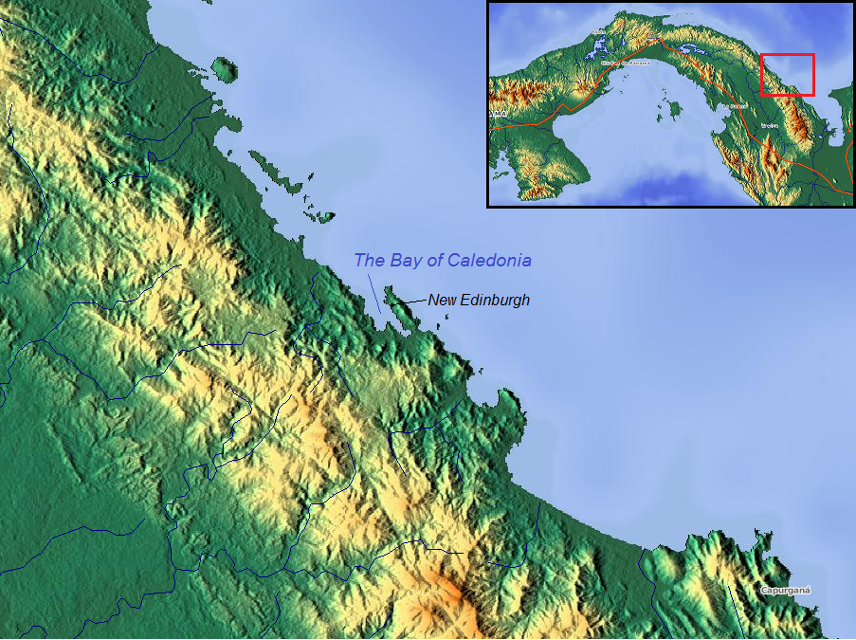
The location of the proposed New Caledonia in Panama.
Video Resource: The Darien Project and the Unification of Great Britain
Panama Wanes In Importance
For nearly two centuries, Panama’s position as the principal land bridge between the Atlantic and Pacific oceans made it one of the most strategically important regions of the Spanish Empire. By the early eighteenth century, however, its prominence began to decline. European conflicts increasingly disrupted colonial trade, and in 1739 British forces captured the Caribbean port of Portobelo, dealing a significant blow to Spain’s transportation network. The weakening of the Spanish treasure fleet system, combined with the development of alternative trade routes and ports elsewhere in the Americas, further reduced Panama’s economic importance. Despite this decline, the dream of a canal crossing Panama continued to capture the imagination of merchants, engineers, and political leaders.
In 1821, local leaders declared independence declared independence from Spain and joined the newly established Republic of Gran Colombia under the leadership of Simón Bolívar. Although Panama remained part Colombia, for much of the nineteenth century, movements advocating greater autonomy or complete independence continued to emerge, reflecting the region’s distinct geographic and economic interests.
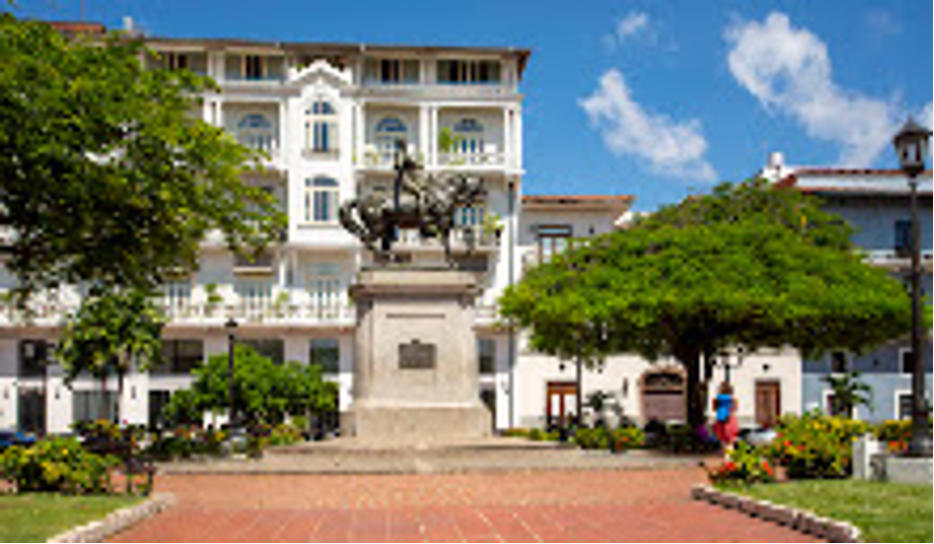
Plaza Herrera in the historic district of Panama City.
Photo: Luis Carlos Garcia
The status is of Generalk Tomás Herrera, the military and political leader who served as president of the short-lived Free State of the Isthmus in 1841. He was one of the key figures in Panama’s movement toward greater autonomy from Colombia.
Panama Regains Its Importance
The California Gold Rush (1848–1855) once again brought Panama and its strategic geography into prominence. The overland route between the East Coast of the United States and California was long, arduous and dangerous. Sailing around Cape Horn meant a months-long voyage. People once again began to focus on the narrow isthmus of Panama that divided two oceans.
Two important events occurred in the 1840s to bring Panama back into an outsized role in the world. The first was the Bidlack Treaty negotiated between New Granada and the United States in 1846 that guaranteed the latter exclusive right of transit across the Isthmus of Panama. The second was that in the 1840s the newly created Pacific Mail Steamship Company established routes from the US to Chagres on the Caribbean and from Panama City to San Francisco on the Pacific.
With the demand for faster transportation across Panama, William Henry Aspinwall, the founder of the steamship line, joined with banker Henry Chauncey and John Lloyd Stephens (an explorer and writer who brought the world’s attention to the Maya ruins and civilization) to establish the Panama Railroad Company.Construction began in 1850 and was completed in 1855 at an estimated cost of $8 million. It created the world’s first transcontinental railroad stretching nearly 48 miles (77 km) across the isthmus.
The railroad was a monumental engineering feat that came at an enormous human cost. Historians estimate that approximately 10,000 lives were claimed by yellow fever, malaria, cholera, dysentery, smallpox, and other causes. Despite these hardships, the railroad transformed global transportation, dramatically reducing travel time between the Atlantic and Pacific. It quickly became one of the most profitable railroads in the world, carrying an estimated 400,000 passengers between 1856 and 1866 and reaffirming Panama’s role as a vital crossroads of international commerce.
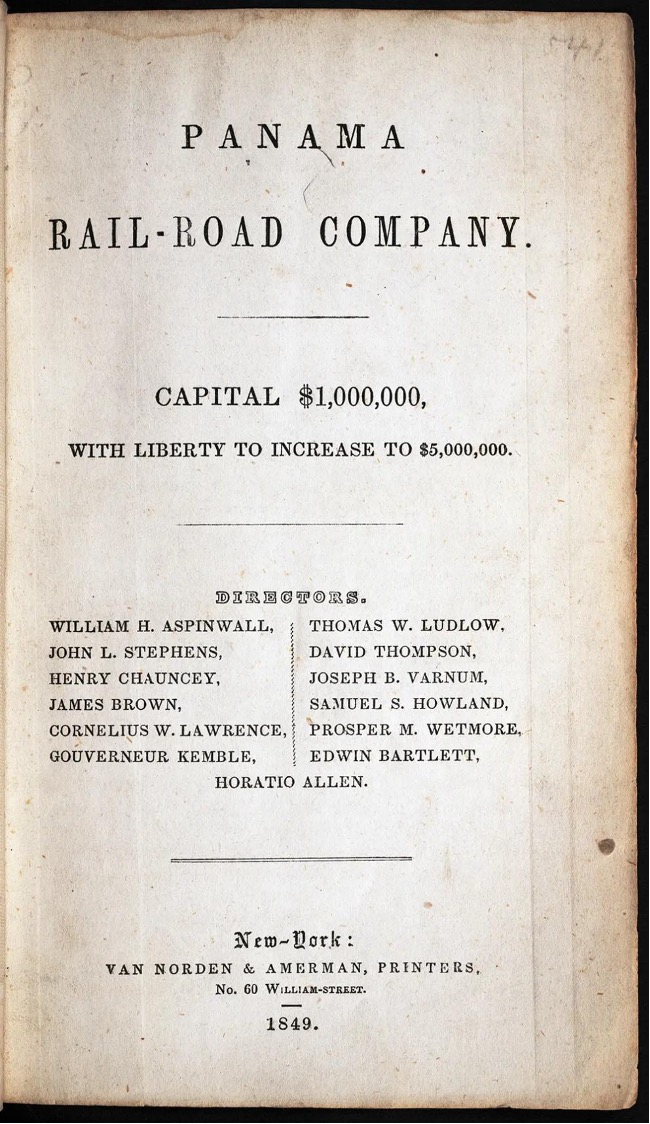
Directors of the Panama Railroad issued this proposal for the railroad with confidence after gold was discovered in California in 1848. Panama Canal Pamphlets. 1848-1881. N.p., 1848, sec. 4. Linda Hall Library History of Science Collection; TC744.N52
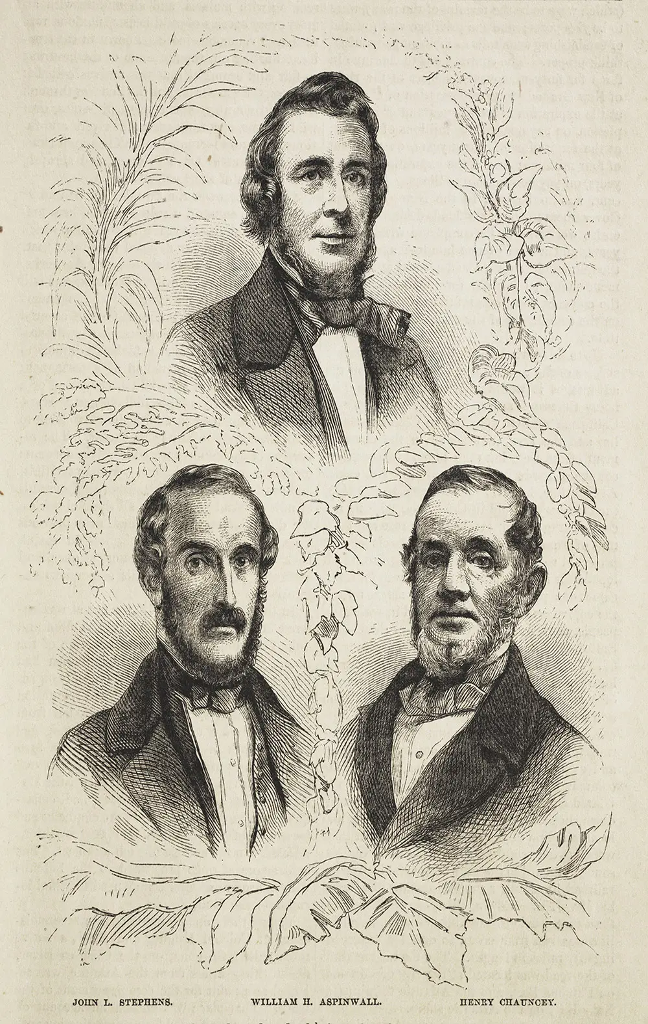
Founders of the Panama Railroad, John L. Stephens, William H. Aspinwall, and Henry Chauncey. Image source: Oran, "Tropical Journeyings." Panama Canal Collection, 1846-1923 (bulk 1906-1914), by Aurin Bugbee Nichols. Fol. XXX, sec. 3. Linda Hall Library, History of Science Collection; TC744.N52
Construction of the railroad was accomplished by people recruited from around the world. Local Panamanians were primarily employed as guides, boatmen, and suppliers. The largest share of the workforce came from Jamaica and Barbados, many recruited after white laborers abandoned the project. Free former black workers and slaves from the United States, Irish, German, and British immigrants, and hundreds of Chinese were recruited to work under the grueling conditions. So many of these people had no known ties to relatives or communities that a thriving side business of the Panama Railroad Company was providing cadavers of the deceased to medical schools and hospitals around the world.
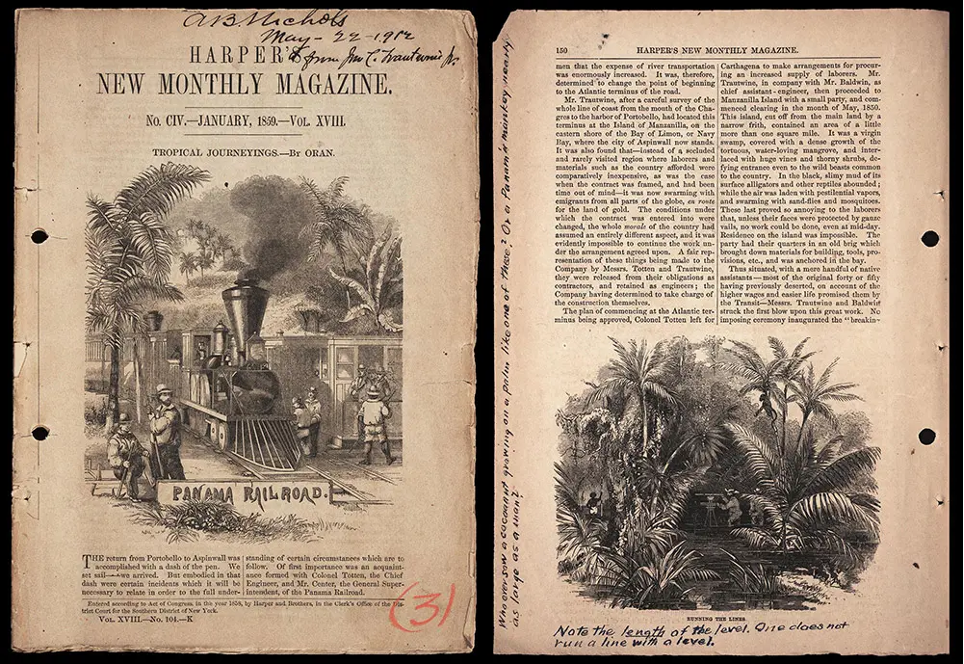
The Panama Railroad as depicted on the cover of Harper’s New Monthly Magazine. Image source: Oran, "Tropical Journeyings." Panama Canal Collection, 1846-1923 (bulk 1906-1914), by Aurin Bugbee Nichols. Fol. XXX, sec. 3. Linda Hall Library, History of Science Collection; TC744.N52
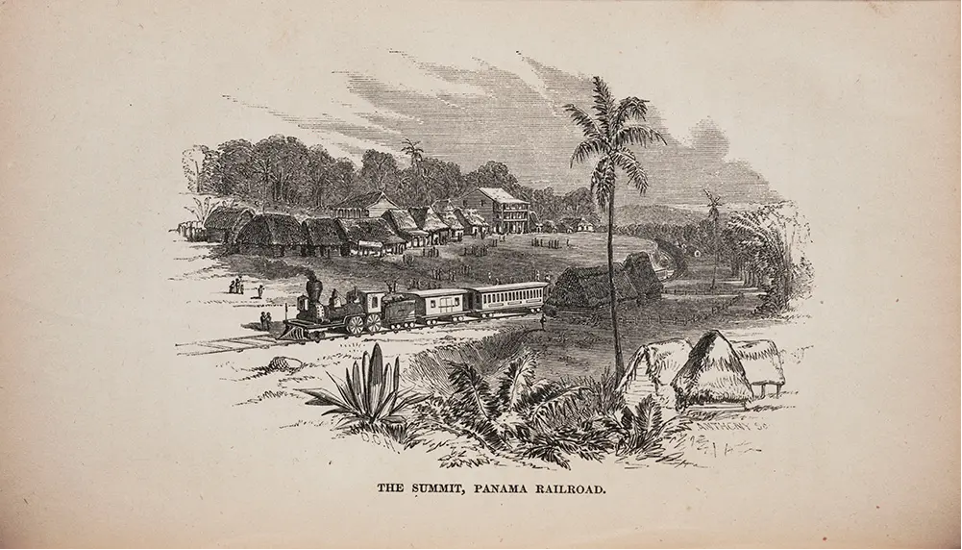
Early view of Culebra, which was known as Summit during construction of the railroad. Image source: Tomes, Robert. Panama in 1855: An account of the Panama rail-road, of the cities of Panama and Aspinwall, with sketches of life and character on the Isthmus. New York: Harper & brothers, 1855, p. 88.